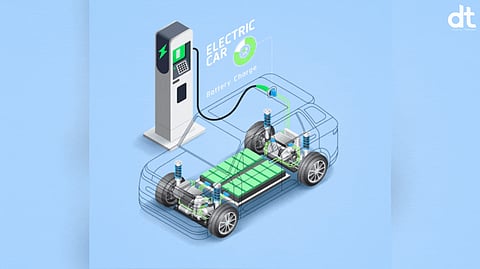

Indian Finance Minister Nirmala Sitharaman has waived off import duties on EV battery components, reducing them to zero. With these efforts, domestic manufacturing is poised to grow significantly. The announcement came on March 25, 2025, ahead of the Finance Bill 2025’s passage in parliament, the move aims at fostering local production and increasing global competitiveness.
"We aim to boost domestic production and enhance export competitiveness by reducing duties on raw materials," said the finance minister.
As part of this initiative, import duties have been removed on 35 key components necessary for EV battery assembling and 28 critical parts used in mobile phone production. By eliminating these duties, the government aims to lower the overall cost of EV production. The decision is also seen as a strategic response to counterbalance the potential effects of the reciprocal tariffs imposed by the U.S., set to take effect on April 2, 2025.
The exemption from import duties applies to key components essential for EV battery production, including lithium-ion battery cells, electrolytes, separators, battery management systems, cathode and anode materials, and thermal insulation components. Since batteries constitute a big part of an electric vehicle's total price, this move is expected to accelerate the adoption of electric mobility in India. The policy change has already influenced the market, with investors reacting positively.
The recent duty exemptions are set to lower production costs for manufacturers, estimated to make smartphones and electric vehicles more affordable for consumers. This move is also expected to attract increased investment in local manufacturing, enhance export competitiveness, and create new job opportunities in the sector.
Aligning with recommendations from a parliamentary committee to cut the tariffs on raw material imports to encourage local manufacturing, the policy reflects the government's commitment to strengthening India’s industrial base. As global supply chains shift, India is strategically positioning itself to benefit from these changes. With this move, the government aims to foster a sustainable manufacturing ecosystem rather than relying on imports to lower consumer prices.
𝐒𝐭𝐚𝐲 𝐢𝐧𝐟𝐨𝐫𝐦𝐞𝐝 𝐰𝐢𝐭𝐡 𝐨𝐮𝐫 𝐥𝐚𝐭𝐞𝐬𝐭 𝐮𝐩𝐝𝐚𝐭𝐞𝐬 𝐛𝐲 𝐣𝐨𝐢𝐧𝐢𝐧𝐠 𝐭𝐡𝐞 WhatsApp Channel now! 👈📲
𝑭𝒐𝒍𝒍𝒐𝒘 𝑶𝒖𝒓 𝑺𝒐𝒄𝒊𝒂𝒍 𝑴𝒆𝒅𝒊𝒂 𝑷𝒂𝒈𝒆𝐬 👉 Facebook, LinkedIn, Twitter, Instagram
