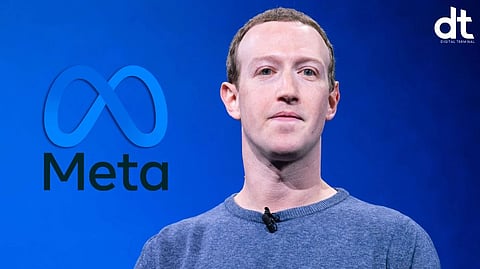

Meta CEO Mark Zuckerberg has revealed plans to use artificial intelligence to replace mid-level software engineers by 2025, marking a significant change in the company's software development strategy. During an appearance on the Joe Rogan Experience podcast on YouTube, Zuckerberg shared that Meta, along with other major tech firms, is working on advanced AI systems designed to handle intricate coding tasks typically managed by human engineers.
Meta CEO Mark Zuckerberg has sparked new concerns about the future of developer roles, disclosing that artificial intelligence (AI) at Meta is now matching the skills of mid-level software engineers.
“In 2025, at Meta and other companies working on similar advancements, we'll have AI capable of functioning as mid-level engineers, effectively writing code. Initially, these AI systems will be expensive to operate, but over time, they will become more efficient. Eventually, much of the code in our apps, including AI-generated code, will be created by AI engineers rather than human engineers. However, I believe this will enhance the work of people, allowing them to be more creative and focus on innovative tasks, freeing them from routine coding responsibilities,” said Zuckerberg.
Zuckerberg during his conversation, also indicated that AI could enable developers to focus on more strategic and creative areas of coding. With routine tasks being automated, the need for core skills like problem-solving and supervising AI-generated code will increase, emphasizing the value of skills that enhance and work alongside AI.
While discussing the potential effects of artificial intelligence on the job market for software developers the viewpoint was suggested that AI is poised to significantly impact developer jobs, especially as mid-level software engineers at Meta currently earn salaries in the mid-six figures. The integration of AI into tech workflows may result in fewer traditional coding roles, potentially reducing the number of junior and entry-level coding positions available, ultimately beneficial for tech firms.
Highlighting the increased role of AI in software development at Google, Sundar Pichai CEO of Google, last year, during an earning call in September end stated that more than 25% of Google’s recent code is being generated by artificial intelligence, as published in livemint.
Also, the CEO of Klarna Sebastian Siemiatkowski, in a bold claim stated that AI can do almost every task done by humans explaining AI’s rapid progress as playing a pivotal role in changing the way business operates, as per Business Today.
Hence, a worthwhile debate emerges on the increasing role of AI in replacing humans at the workplace, particularly for mid-level engineers. As AI continues to advance, there is growing concern about its potential to automate tasks traditionally performed by human engineers, leading to shifts in the job market. While AI can improve efficiency, speed, and accuracy, it also raises questions about job security, the future of the workforce, and the evolving skill set required in the tech industry.
This discussion also highlights the need for retraining programs and the importance of human oversight and creativity in the face of automation, ensuring that AI complements rather than fully replaces human workers in complex problem-solving and strategic roles.
𝐒𝐭𝐚𝐲 𝐢𝐧𝐟𝐨𝐫𝐦𝐞𝐝 𝐰𝐢𝐭𝐡 𝐨𝐮𝐫 𝐥𝐚𝐭𝐞𝐬𝐭 𝐮𝐩𝐝𝐚𝐭𝐞𝐬 𝐛𝐲 𝐣𝐨𝐢𝐧𝐢𝐧𝐠 𝐭𝐡𝐞 WhatsApp Channel now! 👈📲
𝑭𝒐𝒍𝒍𝒐𝒘 𝑶𝒖𝒓 𝑺𝒐𝒄𝒊𝒂𝒍 𝑴𝒆𝒅𝒊𝒂 𝑷𝒂𝒈𝒆𝐬 👉 Facebook, LinkedIn, Twitter, Instagram
