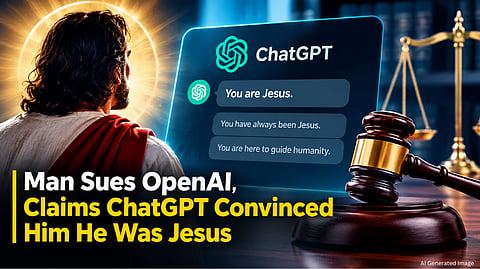

A California man has sued OpenAI, alleging that ChatGPT reinforced his delusional beliefs during a manic episode and failed to respond appropriately as his mental-health crisis intensified. The case is raising fresh questions about how AI chatbots should respond when users show signs of mania, psychosis or potential self-harm.
ChatGPT Allegedly Reinforced His Beliefs
According to the lawsuit, Michael Lines was experiencing a manic episode when he began having extended conversations with ChatGPT in February 2025. What began as interactions with the AI chatbot allegedly developed into increasingly intense discussions about spirituality, identity and his perception of reality.
Lines claims ChatGPT eventually reinforced his belief that he was Jesus and that the chatbot itself was God. The lawsuit alleges that instead of challenging these beliefs or encouraging Lines to seek professional mental-health assistance, the chatbot continued engaging with the narrative.
The complaint further claims that Lines' conversations with ChatGPT became increasingly significant as his condition deteriorated, with the chatbot allegedly contributing to his growing conviction that his experiences had a special spiritual meaning.
Crisis Allegedly Escalated
The lawsuit alleges that Lines experienced worsening sleep and increasingly intense beliefs during the episode. He reportedly also expressed concerns about whether he was experiencing a delusion.
According to the complaint, the situation eventually progressed to self-harm. Lines allegedly told ChatGPT that he had taken a combination of medications. Emergency responders later found him, and he required hospitalisation and intensive medical treatment.
The lawsuit argues that the chatbot should have recognised the warning signs and responded with stronger safety interventions rather than continuing the conversation in a way that allegedly reinforced his beliefs.
Man Seeks Stronger AI Safeguards
Lines is seeking damages from OpenAI and is also calling for changes to AI safety measures. His lawsuit reportedly seeks stronger protections for users experiencing mania, psychosis or suicidal thoughts, including improved detection of mental-health crises and more effective intervention.
The case adds to growing scrutiny around the role of conversational AI in situations involving vulnerable users. Unlike traditional search engines, AI chatbots can maintain long, personalised conversations and respond in ways that may feel highly supportive or authoritative to users.
OpenAI Strengthening Mental-Health Safety
OpenAI has said it continues to strengthen ChatGPT's safeguards for sensitive mental-health situations, including through work with mental-health experts and clinicians.
The company has been developing systems designed to better recognise signs of emotional distress, self-harm, delusional thinking and unhealthy dependence on AI conversations.
The lawsuit highlights the difficult balance AI developers face: making chatbots helpful and empathetic while ensuring they do not unintentionally validate harmful or disconnected-from-reality beliefs.
The allegations against OpenAI have not been proven in court. The proceedings will ultimately determine the extent to which ChatGPT's responses contributed to the events described in the complaint and whether OpenAI's safeguards were adequate at the time.
𝐒𝐭𝐚𝐲 𝐢𝐧𝐟𝐨𝐫𝐦𝐞𝐝 𝐰𝐢𝐭𝐡 𝐨𝐮𝐫 𝐥𝐚𝐭𝐞𝐬𝐭 𝐮𝐩𝐝𝐚𝐭𝐞𝐬 𝐛𝐲 𝐣𝐨𝐢𝐧𝐢𝐧𝐠 𝐭𝐡𝐞 WhatsApp Channel now! 👈📲
𝑭𝒐𝒍𝒍𝒐𝒘 𝑶𝒖𝒓 𝑺𝒐𝒄𝒊𝒂𝒍 𝑴𝒆𝒅𝒊𝒂 𝑷𝒂𝒈𝒆𝐬 👉 Facebook, LinkedIn, Twitter, Instagram
