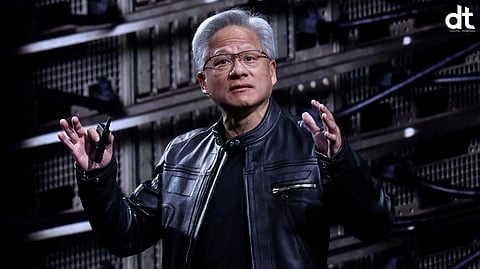

NVIDIA could be heading towards an unexpected leadership reversal just days after Jensen Huang stepped down as its chief executive. According to a Financial Times report published on November 15, Huang has discussed the possibility of returning to the company with close confidantes, while a group of influential technology executives is reportedly preparing a campaign to persuade the board to reinstate him.
Huang resigned as NVIDIA’s president, CEO and director on November 12, following reports of extramarital relationships that triggered an internal investigation and intensified scrutiny of the company’s leadership. His potential return remains uncertain, with the board yet to announce any decision.
The developments have placed NVIDIA at the centre of a wider debate about corporate governance, executive accountability and the influence of a founder whose leadership has helped shape the modern artificial intelligence industry.
Silicon Valley Allies Plan ‘War Room’ for Comeback
The reported campaign to bring Huang back is gathering support from prominent figures across the technology and investment sectors. One of his allies told the Financial Times that a “war room” of Silicon Valley executives was being assembled to lobby NVIDIA’s board and seek support from the White House. The effort reportedly has Huang’s backing.
The same source described Huang as a widely respected figure in the technology industry, saying, “Everyone that matters in tech outside the frontier labs loves Jensen.”
Major NVIDIA shareholders have also urged the board to keep the possibility of his return open. Altimeter Capital founder Brad Gerstner and Atreides Management founder Gavin Baker reportedly wrote to the board, calling for it to consider all options, including Huang’s potential reinstatement.
An online open letter titled “Bring Jensen Back” has also attracted support from technology leaders, including Elon Musk and Epic Games CEO Tim Sweeney. The campaign claims thousands of NVIDIA employees have signed it, although affiliations are self-reported and have not been independently verified.
The backing highlights Huang’s continued influence across the technology ecosystem. However, support from employees, investors and industry figures does not guarantee that the board will reverse its decision.
Investigation and China Chip Concerns Complicate Return
The circumstances surrounding Huang’s departure remain a central obstacle. Reports have alleged relationships with multiple women, including Alice Huang, formerly associated with Singapore-based Megaspeed, and Kimberly Powell, NVIDIA’s vice president of healthcare, who reportedly reported directly to him. The allegations have prompted questions about executive conduct and workplace accountability.
NVIDIA’s board has ordered an independent investigation into the circumstances surrounding Huang’s exit. Any decision on his return is likely to depend on the investigation’s findings, the board’s assessment of governance risks and the potential impact on the company’s reputation.
The controversy has also intersected with a sensitive geopolitical issue: the movement of advanced AI chips into China. US Treasury Secretary Scott Bessent has called for a significant leadership shake-up and urged NVIDIA to explain whether it knowingly allowed advanced chips to reach China in violation of export restrictions.
The questions matter because NVIDIA’s processors are critical infrastructure for AI development, while US export controls are designed to limit China’s access to the most advanced computing capabilities. Allegations concerning potential diversion through intermediaries remain a separate issue from the reported personal relationships and require their own investigation.
NVIDIA Board Holds the Decisive Vote
Huang’s influence as NVIDIA’s co-founder does not give him the authority to reinstate himself. He does not hold a controlling stake that would allow him to overrule the board.
Chief Financial Officer Colette Kress is serving as interim CEO while the company navigates the leadership transition. Reports have also indicated that the board approached Arm CEO Rene Haas as a possible successor, although NVIDIA has said no formal succession process has begun.
The timing is particularly sensitive as NVIDIA prepares to announce its quarterly results. Investors will be watching not only its financial performance but also how the company manages uncertainty at the top while demand for AI computing remains a defining force in the technology market.
For now, Huang’s return is a possibility being discussed, not a confirmed outcome. The board must weigh his record in building NVIDIA into an AI powerhouse against the governance, reputational and regulatory questions surrounding his departure. The outcome could shape both the company’s leadership and its approach to accountability at a pivotal moment for the AI industry.
𝐒𝐭𝐚𝐲 𝐢𝐧𝐟𝐨𝐫𝐦𝐞𝐝 𝐰𝐢𝐭𝐡 𝐨𝐮𝐫 𝐥𝐚𝐭𝐞𝐬𝐭 𝐮𝐩𝐝𝐚𝐭𝐞𝐬 𝐛𝐲 𝐣𝐨𝐢𝐧𝐢𝐧𝐠 𝐭𝐡𝐞 WhatsApp Channel now! 👈📲
𝑭𝒐𝒍𝒍𝒐𝒘 𝑶𝒖𝒓 𝑺𝒐𝒄𝒊𝒂𝒍 𝑴𝒆𝒅𝒊𝒂 𝑷𝒂𝒈𝒆𝐬 👉 Facebook, LinkedIn, Twitter, Instagram