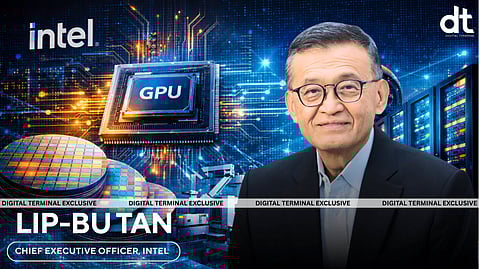

At the Cisco AI Summit, Intel Chief Executive Officer Lip-Bu Tan outlined a focused roadmap to reposition the company as a major force in artificial intelligence computing, emphasizing GPU development, advanced manufacturing, and large-scale foundry services as central to Intel’s future growth.
Speaking during his interaction with Cisco President and Chief Product Officer Jeetu Patel, Tan highlighted how Intel is balancing product innovation with manufacturing transformation to support the rapidly evolving AI ecosystem.
Strengthening Intel’s GPU Capabilities for AI Workloads
Tan emphasized that Intel is moving beyond its traditional CPU focus to build a significant GPU portfolio designed for AI workloads. To accelerate this effort, Intel has brought in a dedicated Chief GPU Architect, underscoring the company’s commitment to specialized graphics processors that can meet the performance and efficiency needs of modern AI systems.
Intel’s GPU strategy is built around flexibility and workload optimization rather than reliance on a single architecture. The company is expanding support for multiple computing frameworks and aligning hardware design with software ecosystems and AI deployment requirements. This software-driven approach is shaping Intel’s next-generation processors, ensuring tighter integration between hardware, system software, and data center infrastructure.
Expanding Foundry Operations and Manufacturing Excellence
A key pillar of this strategy is Intel’s rapidly evolving foundry business. Tan detailed how the company has significantly improved production efficiency and yield performance across its fabs, restoring confidence in its manufacturing operations. These improvements have already attracted interest from external customers seeking advanced, geographically diversified fabrication capacity.
Intel is positioning its foundry as a general-purpose manufacturing platform capable of serving both internal product teams and third-party designers. The company’s 18A process technology is approaching commercial readiness, while its next-generation 14A node is scheduled for risk production in 2028 and volume manufacturing in 2029. These nodes are expected to support future GPU and AI accelerator designs with higher performance and better energy efficiency.
Disciplined Capacity Expansion and Customer Alignment
Rather than expanding capacity speculatively, Intel is linking capital investments to confirmed customer demand. Manufacturing scale-up, equipment purchases, and material sourcing are being driven by long-term volume commitments, ensuring sustainable growth and operational discipline.
This customer-driven approach reflects Intel’s focus on building long-term partnerships and reducing operational risks in large-scale AI deployments.
Investing in Advanced Packaging and New Materials
Beyond core fabrication, Tan emphasized Intel’s growing focus on advanced packaging and new materials. As AI processors become more complex, system-level integration is becoming critical. Intel is investing in heterogeneous packaging technologies and exploring materials such as glass substrates and compound semiconductors to improve power delivery, signal integrity, and thermal performance.
These innovations are expected to play a vital role in supporting next-generation AI platforms.
Addressing Infrastructure and Supply Chain Challenges
Tan also addressed the wider infrastructure challenges shaping GPU and AI development. Persistent memory shortages, rising power consumption, and thermal constraints are influencing processor design and data center architecture. Intel is incorporating advanced cooling and energy-efficiency considerations into its future platforms.
Building trust with customers remains central to Intel’s foundry ambitions. The company is working closely with partners to gradually scale production volumes, demonstrating reliability and consistency before expanding deployments.
Reinforcing US Semiconductor Leadership
At a strategic level, Tan positioned Intel’s transformation as part of a broader effort to strengthen US semiconductor manufacturing and reduce global supply chain risks. By integrating GPU development, leading-edge fabrication, advanced packaging, and system-level innovation, Intel aims to deliver a complete AI hardware platform for enterprises and cloud providers.
Through his address at the Cisco AI Summit, Tan presented Intel’s renewed focus on execution, customer alignment, and technological leadership, signaling the company’s intent to reclaim a central role in the global AI semiconductor ecosystem.
Watch the interaction during the CISCO AI Summit
𝐒𝐭𝐚𝐲 𝐢𝐧𝐟𝐨𝐫𝐦𝐞𝐝 𝐰𝐢𝐭𝐡 𝐨𝐮𝐫 𝐥𝐚𝐭𝐞𝐬𝐭 𝐮𝐩𝐝𝐚𝐭𝐞𝐬 𝐛𝐲 𝐣𝐨𝐢𝐧𝐢𝐧𝐠 𝐭𝐡𝐞 WhatsApp Channel now! 👈📲
𝑭𝒐𝒍𝒍𝒐𝒘 𝑶𝒖𝒓 𝑺𝒐𝒄𝒊𝒂𝒍 𝑴𝒆𝒅𝒊𝒂 𝑷𝒂𝒈𝒆𝐬 👉 Facebook, LinkedIn, Twitter, Instagram
