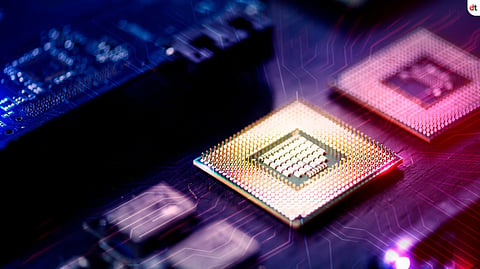

India’s semiconductor chip production score is forecast to rise from 0% in 2025 to 13% by 2030, reflecting growing momentum around the country’s semiconductor ambitions. However, India’s overall technology sovereignty score is expected to improve only modestly, from 32% in 2025 to 35% by 2030, underscoring that broader technology autonomy will require sustained investment in AI, cloud, data center capacity, software, talent, and strategic partnerships.
Globally, technology sovereignty will remain difficult to achieve. Forrester forecasts that the average technology sovereignty score across the 14 countries assessed (Australia, Brazil, Canada, China, France, Germany, India, Italy, Japan, Mexico, South Korea, Spain, the UK, and the US) will rise only minimally, from 39% in 2025 to 40% in 2030, while China and the US will continue to lead with the highest overall tech sovereignty scores.
Both countries are expected to maintain their lead over the next five years, underscoring that tech sovereignty will remain concentrated among a small number of geopolitical and economic powers. For midsize and emerging technology powers such as India, the path forward will depend less on full self-sufficiency and more on targeted investments, open technologies, alliances, and durable public-private partnerships.
Released for the first time, Forrester’s Global Sovereignty Forecast includes a tech sovereignty index, which measures a country’s ability to develop, operate, and secure critical technologies independently to reduce exposure to geopolitical risks. The index assesses each country across nine dimensions of technology sovereignty: government AI investment, cloud sovereignty, technology workforce availability, AI model development, data center capacity relative to technology spending, data center autonomy, semiconductor production, software creation, and rare earths processing.
Among all technology dimensions, semiconductor manufacturing among the assessed countries shows strongest projected improvement. India's semiconductor chip production score is forecasted to increase from 0% in 2025 to 13% by 2030. The US and South Korea are expected to lead this category, with their chip production scores rising from 45% in 2025 to 79% in 2030, followed by Japan (36% to 53%), China (40% to 51%), and India (0% to 13%). Despite these gains, Forrester notes that semiconductors and software will remain among the biggest technology sovereignty challenges, owing to highly concentrated global chip supply chains and the dominance of a limited number of software
"India is well positioned to strengthen its role in the global technology landscape, supported by its digital innovation agenda, AI ambitions, and deep technology talent pool," said Biswajeet Mahapatra, principal analyst at Forrester. "As AI competition and geopolitical uncertainty intensify, India's success will depend on balancing strategic autonomy with strong global partnerships while continuing to invest in trusted infrastructure and resilient technology ecosystems."
Additional key findings from the forecast include:
Asia Pacific is highly polarized. The region encompasses both the world’s strongest and most constrained technology sovereignty positions. After China, South Korea is expected to rise from 45% in 2025 to 47% in 2030, followed by Japan from 43% to 46%. India is also forecasted to improve from 32% to 35%, while Australia is expected to remain flat at 29%.
North America presents a sharp sovereignty divide. While the US is forecasted to remain a global leader, Canada is expected to improve more modestly, from 33% to 34%. Mexico will continue to remain the lowest among the 14 countries assessed, at 20%, highlighting the region’s uneven distribution of technology power.
Europe’s largest economies remain dependent on foreign technology providers. Germany and Spain are each forecasted to rise from 34% in 2025 to 36% in 2030, France from 33% to 35%, the UK from 30% to 32%, and Italy from 27% to 29% Despite these improvements, Europe’s lower scores reflect significant dependencies on chips, cloud, software, and data center capacity.
“Ongoing geopolitical volatility, AI competition, and semiconductor supply chain risks have put tech sovereignty firmly in the spotlight,” said Dario Maisto, principal analyst at Forrester. “Today, tech sovereignty is concentrated in the hands of a few global leaders, creating an uneven competitive advantage for some countries. To compete in the AI era, nations must understand their strategic dependencies and build durable partnerships that safeguard their data, infrastructure, and long-term autonomy.”
𝐒𝐭𝐚𝐲 𝐢𝐧𝐟𝐨𝐫𝐦𝐞𝐝 𝐰𝐢𝐭𝐡 𝐨𝐮𝐫 𝐥𝐚𝐭𝐞𝐬𝐭 𝐮𝐩𝐝𝐚𝐭𝐞𝐬 𝐛𝐲 𝐣𝐨𝐢𝐧𝐢𝐧𝐠 𝐭𝐡𝐞 WhatsApp Channel now! 👈📲
𝑭𝒐𝒍𝒍𝒐𝒘 𝑶𝒖𝒓 𝑺𝒐𝒄𝒊𝒂𝒍 𝑴𝒆𝒅𝒊𝒂 𝑷𝒂𝒈𝒆𝐬 👉 Facebook, LinkedIn, Twitter, Instagram
