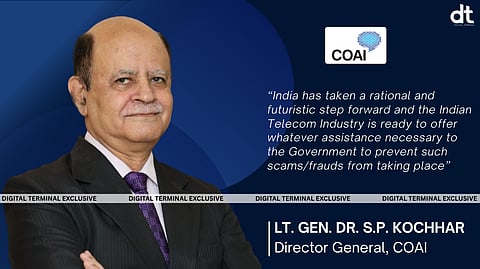

In a decisive move to protect citizens and secure digital communications, India has introduced the world’s first persistent SIM binding mandate, a pioneering initiative aimed at combating rising cyber threats and digital fraud. The Cellular Operators Association of India (COAI) has lauded the Department of Telecommunications (DoT) for this bold step, describing it as a landmark measure to create a verified identity layer across the country’s mobile ecosystem. Speaking on behalf of COAI, Lt. Gen. Dr. S.P. Kochhar, Director General, emphasized the transformative potential of the mandate in enhancing national security and safeguarding Indian citizens.
As cyberattacks and spyware become increasingly sophisticated worldwide, the need for robust, enforceable safeguards has never been greater. Persistent SIM binding ensures that every mobile connection in India is linked to a verified individual, significantly raising the bar for fraudsters and malicious actors attempting to exploit the digital infrastructure.
India Introduces Pioneering Security Mandate
In a detailed statement, Lt. Gen. Dr. S.P. Kochhar, Director General of COAI, elaborated on the significance of this initiative, “As global agencies warn of sophisticated spyware and rampant platform frauds, India has implemented a pioneering security mandate — persistent SIM binding — to establish a verified identity layer and lead the way in securing digital communications in the country. COAI lauds the Department of Telecommunications (DoT) for bolstering National Security and safeguarding Indian citizens, through this pioneering mandate. While many international bodies have brought out these issues to the forefront, India, for the first time globally, officially undertook this practical step to address the menace of digital spams and frauds.”
A Timely Response to Rising Global Threats
Highlighting the urgency of the mandate amid escalating spyware threats, Dr. Kochhar explained, “For example, in an alert dated 24 November 2025, titled Spyware Allows Cyber Threat Actors to Target Users of Messaging Applications, the CISA warned of “Guardian” spyware targeting users of messaging platforms through malicious links. This tool compromises both Android and iOS devices, enabling data theft and surveillance. It has been deployed globally, with human rights defenders and journalists among the primary targets. As CISA strongly encourages users to take steps to secure their mobile communications, India’s pioneering decision to mandate persistent SIM binding emerges as a timely and critical security measure. By establishing a verified identity layer, it significantly raises the barrier for such malicious actors.”
Tackling Platform Fraud at Scale
Underlining the importance of stronger safeguards against digital fraud, Dr. Kochhar emphasized the critical role of the SIM binding mandate. He stated, “This move is especially relevant in light of reporting from Reuters, which revealed that a social media giant failed for at least three years to identify and stop an avalanche of ads. These ads exposed billions of messaging app users to fraudulent e-commerce and investment schemes, illegal online casinos and the sale of banned medical products. India’s SIM binding directive directly counters this environment by enforcing accountability, making it a vital step toward curbing large-scale fraud and abuse on digital platforms.”
Limitations of Existing Measures
Highlighting the gaps in current platform-based anti-fraud efforts, Dr. Kochhar noted, “While some individual messaging services have taken steps to combat spam and fraud, their effectiveness on the ground remains limited. For example, it is concerning to note that one prominent platform has acted on only about 2.5% of total ban appeals — a meager rate that underscores the need for more robust, systemic protections.”
Neutralizing Transnational Scams
The initiative underscores the urgent need for stronger safeguards against international digital fraud, as emphasized by Dr. Kochhar. He explained, “Further highlighting these vulnerabilities, the National Cybercrime Threat Analytics Unit (I4C) has identified a transnational scam in which fake social media advertisements lure users into linking their messaging accounts via malicious QR codes. This exploits the ‘linked devices’ feature to hijack accounts, creating “mule accounts” that are rented out to conduct fraud. India’s recent SIM binding mandate neutralizes this specific risk by ensuring that a messaging session is permanently tied to its original, verified SIM card, thereby preventing remote hijacking and account rental. This proactive measure establishes a foundational security layer to eliminate such exploitation and combat evolving digital fraud.”
A Forward-Looking Step
Dr. Kochhar underscored the initiative’s significance. He said, “India has taken a rational and futuristic step forward in this context and the Indian Telecom Industry is ready to offer whatever assistance necessary to the Government to prevent such scams/frauds from taking place.”
Conclusion
India’s persistent SIM binding mandate represents a decisive and forward-looking approach to securing the nation’s digital communications. By establishing a verified identity layer, the country not only protects its citizens from large-scale fraud and transnational cyber threats but also sets a global precedent in proactive, enforceable cybersecurity measures. With the combined efforts of the Government and the telecom industry, India is positioning itself as a leader in creating safer, more accountable digital ecosystems for the future.
𝐒𝐭𝐚𝐲 𝐢𝐧𝐟𝐨𝐫𝐦𝐞𝐝 𝐰𝐢𝐭𝐡 𝐨𝐮𝐫 𝐥𝐚𝐭𝐞𝐬𝐭 𝐮𝐩𝐝𝐚𝐭𝐞𝐬 𝐛𝐲 𝐣𝐨𝐢𝐧𝐢𝐧𝐠 𝐭𝐡𝐞 WhatsApp Channel now! 👈📲
𝑭𝒐𝒍𝒍𝒐𝒘 𝑶𝒖𝒓 𝑺𝒐𝒄𝒊𝒂𝒍 𝑴𝒆𝒅𝒊𝒂 𝑷𝒂𝒈𝒆𝐬 👉 Facebook, LinkedIn, Twitter, Instagram
