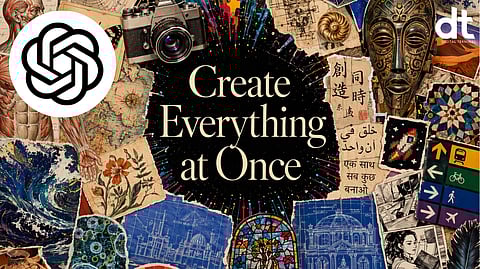

OpenAI has officially launched ChatGPT Images 2.0, a major next-generation image generation model now available across ChatGPT, Codex, and the API. The new release marks an important milestone in the evolution of artificial intelligence, transforming image generation from a creative novelty into a serious productivity and business tool built for real-world applications.
With this latest upgrade, OpenAI is focusing on practical usability, precision, and intelligent execution. ChatGPT Images 2.0 delivers significant improvements in following detailed instructions, rendering complex text accurately, placing objects correctly, handling multiple languages, and producing visuals in a wide range of formats. The result is a more dependable AI system that can help professionals create high-quality visuals faster and with greater control.
A Shift from Experimentation to Professional Utility
Earlier AI image tools often gained attention for creating artistic or entertaining visuals. However, OpenAI’s latest announcement reflects a broader market shift where users now expect AI systems to solve real workflow challenges. ChatGPT Images 2.0 has been designed with that demand in mind.
The upgraded model can generate images for presentations, posters, banners, educational diagrams, product mockups, user interface concepts, social media creatives, and branded marketing materials. It also offers stronger layout understanding, making it better suited for structured designs where balance, spacing, and content hierarchy matter.
This positions the platform as a valuable solution for businesses, startups, designers, educators, and creators seeking faster turnaround times without compromising quality.
Stronger Precision for Detailed Tasks
One of the most notable improvements in ChatGPT Images 2.0 is its ability to manage detail-heavy tasks that previously challenged many image generation systems.
The model now performs better when asked to render small text, tables, interface buttons, labels, charts, and dense layouts. It can also interpret more specific prompts with greater consistency, reducing the need for repeated revisions.
For example, a user can request a retail promotional poster with product pricing, brand placement, and call-to-action text, or a clean mobile app interface with multiple sections and navigation icons. ChatGPT Images 2.0 is built to handle such requests more accurately than earlier versions.
This advancement could prove highly valuable for agencies, marketing teams, publishers, and businesses that rely on quick visual communication.
Thinking Capabilities Introduce a New AI Workflow
Perhaps the most strategic innovation in this launch is the introduction of “thinking-enabled” image generation. OpenAI says Images 2.0 is its first image model capable of working alongside reasoning systems inside ChatGPT.
When enabled, the model can understand broader task intent, reason through a request, generate multiple distinct image concepts from one prompt, and even use the web when relevant for current information. It can also review its own output for better alignment and consistency.
This changes the user experience from simply requesting an image to collaborating with an intelligent creative assistant that helps solve visual problems.
For professionals, this means less time spent rewriting prompts, manually correcting mistakes, or generating endless variations. The system can now shoulder more of the creative workload between concept and completion.
Built for Every Screen and Format
Modern content creation requires assets across multiple platforms, and OpenAI has addressed that need with expanded aspect ratio support.
ChatGPT Images 2.0 supports formats ranging from 3:1 to 1:3, enabling users to create everything from website hero banners and presentation headers to vertical mobile stories, posters, advertisements, and social media creatives.
This flexibility is especially relevant for digital marketers and content teams who often need one campaign adapted across numerous channels.
In another productivity boost, the platform can generate up to eight coherent outputs in one request. This enables campaign variations, storyboard sequences, comic pages, design comparisons, and multi-version creative concepts in a single workflow.
API Availability Expands Commercial Potential
OpenAI has also introduced the underlying model, gpt-image-2, through its API. This gives developers and enterprises the ability to embed image generation and editing directly into apps, platforms, SaaS products, design tools, and internal systems.
For example, e-commerce companies could automate product banners, education platforms could generate learning visuals, media firms could accelerate content production, and software companies could build AI design assistants into their offerings.
This API rollout is likely to drive broader enterprise adoption, where speed, automation, and scalable creative output are becoming competitive advantages.
Wider Industry Impact
The launch of ChatGPT Images 2.0 comes at a time when organizations worldwide are looking to integrate AI into everyday operations. While text generation has already changed productivity software, visual generation is now entering the same phase of commercial maturity.
Industries such as advertising, media, education, retail, product design, publishing, and software development stand to benefit significantly from faster, lower-cost visual production with higher consistency.
By combining reasoning intelligence with visual generation, OpenAI is also signaling the future direction of AI tools: systems that do more than create content, but actively help users think, plan, and execute.
Availability
ChatGPT Images 2.0 is available starting today to all ChatGPT and Codex users. Advanced Thinking-enabled capabilities are being offered to Plus, Pro, Business, and Enterprise subscribers, while developers can access the model through the API.
𝐒𝐭𝐚𝐲 𝐢𝐧𝐟𝐨𝐫𝐦𝐞𝐝 𝐰𝐢𝐭𝐡 𝐨𝐮𝐫 𝐥𝐚𝐭𝐞𝐬𝐭 𝐮𝐩𝐝𝐚𝐭𝐞𝐬 𝐛𝐲 𝐣𝐨𝐢𝐧𝐢𝐧𝐠 𝐭𝐡𝐞 WhatsApp Channel now! 👈📲
𝑭𝒐𝒍𝒍𝒐𝒘 𝑶𝒖𝒓 𝑺𝒐𝒄𝒊𝒂𝒍 𝑴𝒆𝒅𝒊𝒂 𝑷𝒂𝒈𝒆𝐬 👉 Facebook, LinkedIn, Twitter, Instagram
