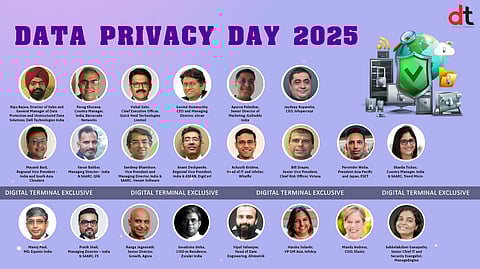

As the world becomes more digitally interconnected, the importance of safeguarding personal and business data has become more critical than ever before. Data Privacy Day 2025 serves as a critical reminder of the need for privacy, security, and trust in a rapidly evolving technological landscape dominated by artificial intelligence, IoT, and cloud computing. Experts from leading companies around the globe are emphasizing the importance of proactive measures, solid data governance, and a culture of security awareness to safeguard our most valuable assets. Prominent leaders from across the tech industry have shared their insights with DT on fortifying digital defenses and ensuring a secure digital future for all.
AI and Data Privacy: The Twin Challenges of The Digital Age

The surge in AI-driven innovation has raised new concerns about data privacy and security, pushing organizations to rethink how they protect sensitive information. According to Ripu Bajwa, Director of Sales and General Manager of Data Protection and Unstructured Data Solutions, Dell Technologies India, “Protecting data from malicious actors is more critical than ever in the AI age. AI can generate advanced ransomware, malware, and deepfake attacks, with threats like data poisoning, ransomware, privacy breaches, and social engineering becoming more common. As businesses rely more on data tools, the risk of sensitive information exposure increases, especially when AI systems depend on this data.”
Ripu Bajwa also cites a worrying statistic, “A Dell Technologies report found that 45% of Indian businesses lack adequate security for generative AI. To stay ahead, companies need a robust cyber resiliency strategy, protecting AI training data, models, and configurations. Modern workloads like Kubernetes volumes and PostgreSQL also require safeguarding. The Dell Solution for AI Data Protection ensures the security and recoverability of data driving AI workloads, providing performance, efficiency, and scalability. Data Privacy Day serves as a reminder to prioritize personal information protection in an AI-driven world, adopt better data practices, and mitigate risks to ensure digital security.”
Efficiency vs. Cybersecurity Risks
Parvinder Walia, President of Asia Pacific and Japan at ESET, highlights the need for a proactive TPRM strategy to mitigate cybersecurity risks. According to Parvinder, “In today’s interconnected world, reliance on third-party vendors enhances efficiency but introduces significant cybersecurity risks, particularly in protecting sensitive data. A prevention-first mindset and robust Third-Party Risk Management (TPRM) strategy—encompassing vendor assessments, encryption, access controls, and clear contractual obligations—are essential to mitigate risks and ensure regulatory compliance.
Parvinder further adds, “Equally important is fostering cyber resilience by integrating vendors into incident response plans, conducting audits, and providing ongoing security training to address emerging threats. Proactive measures and advanced security solutions enable organizations to safeguard data, maintain trust, minimize disruptions, and strengthen their overall cybersecurity posture, ensuring the protection of their most valuable asset in an increasingly complex digital ecosystem - data.”
Zero Trust and AI Security
Sharda Tickoo, Country Manager for India & SAARC, Trend Micro emphasizes the need for a strategic shift to Zero Trust frameworks and AI-powered security. Sharda says, “The Indian government has introduced transformative legislation through DPDP 2023 Act, positioning itself as a vigilant guardian of data privacy. With the establishment of the Data Protection Board, strict penalties, the mandate for Data Protection Officers, and regular audits, the government has underscored its commitment to data protection.”
Sharda further adds, “While these governmental initiatives are vital, organizations must evolve beyond viewing privacy and security as mere compliance checkboxes. A strategic shift towards a Zero Trust framework is critical, embedding security at every layer of AI systems. This includes adopting multi-factor authentication, end-to-end encryption, and conducting comprehensive data protection impact assessments. Simultaneously, AI can serve as a powerful tool for security—driving predictive threat detection, anomaly identification, and real-time adaptive defense mechanisms.”
“The future of digital security lies in creating a symbiotic relationship where AI not only enhances security but is also fortified by it. By empowering everyone with transparent control over their data and respecting individual rights, we can build trust in AI technologies,” Sharda concludes
Building Trust Through Data Privacy
As businesses face rising cyber threats, the concept of trust becomes even more pivotal. Sandeep Bhambure, Vice President and Managing Director of Veeam Software India & SAARC, states, "As we observe Data Privacy Day, it is important to acknowledge that data privacy is not just a compliance issue, it is a fundamental pillar of trust. With rising cyber threats and the complexity of data environments, organizations must be vigilant in protecting sensitive data. Businesses, in particular, need to take a proactive approach to fortify their security systems and build resilience against the relentless wave of potential threats. The scale of cyber threats is staggering, with over 369 million security incidents detected across 8.44 million endpoints. This equates to 702 potential security threats every minute.”
“In this environment, organizations must prioritize data resilience 365 days a year, implementing proactive measures such as data encryption, access controls and real-time tracking to detect vulnerabilities. Let’s use this day as a reminder to prioritize data protection, refine privacy practices, and cultivate a security-first mindset to safeguard sensitive information and stay ahead of the growing volume of cyber threats," Sandeep concludes.
Small Businesses, Big Risks
The risks of data breaches are not limited to large enterprises. Small businesses are particularly vulnerable, yet many fail to adequately protect themselves. Apurva Palnitkar, Senior Director of Marketing at GoDaddy India highlights, “In today’s digital economy, data privacy is a necessity for building customer trust and business resilience regardless of a business’ size. From customer email addresses to critical operational data, every piece of information holds immense value. According to GoDaddy’s data on cybersecurity, 54% of Indian small businesses have experienced an online security breach, with 29% reporting a significant impact to their operations.”
Apurva further adds, “The risks of data breaches are not just financial; they can damage your reputation and customer relationships. Simple steps like training employees on security awareness, using SSL certificates, implementing strong encryption, and ensuring regular backups can help significantly reduce vulnerabilities. This Data Privacy Day 2025, we invite businesses to leverage GoDaddy's AI-driven solutions to enhance security and optimize performance. By taking proactive steps to protect data privacy, businesses can create a robust digital infrastructure and operate with confidence, knowing their websites are secure and reliable."
The Role of Encryption in Securing Data
As cyber threats continue to evolve, encryption remains one of the most important tools for safeguarding sensitive data. Anant Deshpande, Regional Vice President, India & ASEAN, DigiCert emphasizes that, “In today’s digital landscape, securing sensitive data is essential for innovation and success. As cyber threats, especially in India, grow more complex—businesses faced an average of 3,291 cyberattacks per week in the last six months—organizations need comprehensive security at every level.”
“DigiCert stands as a trusted partner, strengthening the foundation of Digital Trust for businesses of all sizes. Our mission is to help integrate future-ready security frameworks, empowering businesses to unlock their potential while ensuring data protection remains a top priority. With the rise of AI-driven attacks and the increase in Infostealer attacks, organizations must go beyond traditional defenses. On Data Privacy Day, we emphasize the importance of Digital Trust in fostering a secure, innovative future. DigiCert is committed to empowering businesses with advanced encryption technologies to ensure both growth and protection in the evolving digital world,” Anant notes.
AI, Privacy, and the Road Ahead
As AI continues to transform business operations, the intersection of data privacy and governance becomes even more critical. Varun Babbar, Managing Director - India & SAARC at Qlik, highlights the importance of responsible data handling in AI systems, stating, “Agentic AI can transform productivity by handling complex tasks independently and adapting to feedback, but its responsible use is essential – making data privacy crucial for building trust. AI’s effectiveness depends on the quality of its data, making strong governance and data quality vital. Responsible data handling doesn’t just build trust—it unlocks AI’s full potential.”
Babbar also comments, “Protecting privacy today means being transparent, ethical, and proactive. As Agentic AI evolves, challenges like skill gaps, fragmented governance, and real-time data needs highlight the importance of clear processes and secure data pipelines. To succeed, businesses must upskill teams, implement strong governance, and invest in impactful AI solutions. Building local cloud regions enhances data security and compliance, safeguarding sensitive information. With Gartner predicting that by 2028, 40% of enterprise AI assets will be traded through marketplaces, privacy and authenticity are more critical than ever. On Data Privacy Day, let’s commit to safeguarding data, building trust, and embracing the Agentic Systems Era, where intelligent agents create new opportunities for growth”
Data Privacy Regulations: The Need for Proactive Action
With new regulations such as the Digital Personal Data Protection Act (DPDPA) set to reshape India’s data privacy landscape, organizations must shift their focus from mere compliance to building strong, proactive security postures. Parag Khurana, Country Manager, India at Barracuda Networks asserts, “Data Privacy Awareness Day is a timely reminder of the role data protection plays in safeguarding the privacy of personal information and the need to ensure the security of our digital data ecosystems. With the introduction of the draft framework for implementing the Digital Personal Data Protection Act (DPDPA), organizations in India now have a clear structure to help them strengthen their approach to data privacy and mitigate cybersecurity risks.
Parag further states, “In practical terms, this means implementing robust measures such as encryption, access controls, authentication, and reliable data backup and recovery to keep sensitive information protected at all times. However, securing personal data goes beyond compliance—it requires building a strong, proactive security posture that can detect, block, investigate, and remediate unauthorized access swiftly.”
“To achieve this, organizations should adopt multi-layered, defense-in-depth security solutions. These include advanced threat detection and prevention capabilities as well as integrated incident response to address emerging threats effectively. “As India’s digital economy continues to grow, embedding privacy and security into the foundation of business operations will be essential—not only for regulatory compliance but also for maintaining trust and resilience in an increasingly connected world,” Parag concludes.
AI & Data Privacy: Challenges and Opportunities
Subhalakshmi Ganapathy, Senior Chief IT and Security Evangelist, ManageEngine points out the growing challenges and opportunities due to AI. According to her, “As we mark Data Privacy Day 2025, we are reminded of the growing challenges and opportunities that AI and machine learning present in the realm of data privacy. The widespread adoption of AI across industries like healthcare, finance, and e-commerce is reshaping how data is collected, stored, and used. However, this transformation also brings significant risks, particularly in managing vast amounts of personal data for extended periods, often beyond what’s necessary. To address these risks, businesses must adopt a 'Data Detox' approach: minimizing data retention, employing anonymization techniques, and implementing transparent data handling practices.”
Subhalakshmi further says, “At the same time, the rise in AI-specific security risks, such as data poisoning and model theft, requires a shared responsibility between AI providers and businesses. Protecting privacy should not be viewed as an obstacle but as a catalyst for innovation and trust-building. As data protection regulations evolve, businesses must continuously adapt to global laws, balancing compliance with the need for cutting-edge AI solutions. By making privacy a competitive advantage, companies can foster trust, maintain long-term customer relationships, and drive responsible growth in an increasingly AI-driven world.”
A Collective Effort to Safeguard Data
As India’s digital economy expands, so do the risks associated with data security. Vishal Salvi, Chief Executive Officer at Quick Heal Technologies Limited notes, “As we observe Data Privacy Day, it is crucial to recognise that privacy and cybersecurity are two sides of the same coin. The recently released DPDP Act draft rules underscore this interconnectedness, setting a new standard for data protection. The landmark legislation is more than just about compliance; it is a call to action for organisations to build a digital ecosystem that is both secure and privacy-focused. The hefty fine of INR 250 crore for data breaches sends a clear message: protecting user data is not optional, it’s imperative."
"At Quick Heal Technologies Limited, it is a matter of immense pride for us that our comprehensive cybersecurity solutions play a vital role in helping businesses comply with these new regulations while maintaining the highest standards of privacy and security. We envision a safer Digital India where data privacy is not just a requirement but a fundamental right," Vishal states.
AI Chatbots: A New Challenge For Data Security
The massive shift in the adoption of AI chatbots pose a big challenge in the digital world for security enterprise data. Govind Rammurthy, CEO and Managing Director at eScan asserts, “In today's rapidly evolving digital landscape, widespread adoption of AI chatbots (ChatGPT, for example) has created new challenges for enterprise data security. While these tools offer tremendous productivity benefits, they also present unprecedented risks when employees share sensitive business information without proper safeguards. Organizations must recognize that every interaction with AI platforms potentially exposes proprietary data, customer information, and internal communications to external systems.”
Govind points out, “At eScan, we've observed that traditional security measures need to evolve to address these emerging threats. The key lies in implementing comprehensive security solutions that combine endpoint protection, data loss prevention, and AI-powered threat detection to create a robust defence against both conventional and AI-enabled security risks. It is imperative for organizations to establish clear policies around AI tool usage by providing regular training to employees about data privacy best practices.”
“As we celebrate Data Privacy Day, let us understand that protecting sensitive information is not just about having the right tools – it's about fostering a culture of security awareness where every team-member understands their role in safeguarding organizational data, especially when engaging with new technologies,” Govind concludes.
A Call to Action: Strengthening Data Privacy Practices
Data Privacy Day 2025 is a call to action for businesses, governments, and individuals to prioritize data protection in an increasingly complex and interconnected world. Jaydeep Ruparelia, CEO of Infopercept says, “Data Privacy Day emphasizes the ever-growing significance of compliance, regulations and information governance. Just as the IT and threat landscapes are no longer static but increasingly dynamic, so is the state of emerging regulatory mandates. The days of one-off assessments and static tick-mark activities are behind us. Data privacy and compliance need to be seen as catalysts for continuous improvement. Beyond demonstrating credibility and alignment with new data privacy guidelines, the real opportunity for businesses lies in integrating data-centric security and IT design into their forward-thinking vision, as this can be a unique competitive advantage and a way forward to cyber maturity.”
Data Privacy in a Borderless Digital World
Suvabrata Sinha, CISO-in-Residence at Zscaler India, aptly sums up the new digital paradigm, stating, “Data is no longer confined by traditional boundaries; it flows freely across an interconnected digital ecosystem fueled by cloud technologies, artificial intelligence, and IoT. This paradigm shift has fundamentally redefined how we create, share, and protect sensitive information, challenging us to rethink security for a borderless world. In this new reality, safeguarding data is not merely about compliance, but about securing trust, accelerating innovation, and enabling a resilient digital future. Security is no longer a back-office IT concern; it’s a strategic boardroom priority that underpins reputation, customer trust, and long-term business continuity.”
AI and Privacy: The Double-Edged Sword
Mayank Baid, Regional Vice President - India and South Asia at Cloudera, emphasizes the growing importance of data privacy in an AI-driven world. He says, “In today’s digital world where data drives business decisions and benefits, privacy is both a right and a shared responsibility. Data breaches and misuse expose individuals to risks like identity theft and financial fraud, while organizations face reputational damage, financial losses, and loss of trust. As India progresses on the path toward becoming a global digital hub, the emphasis on safeguarding sensitive information has become paramount.”
Mayank further adds, “Data Privacy Day is a timely reminder to prioritize privacy and trust across business functions. While enterprises often rely on data privacy measures such as encryption and backups, truly effective data safeguarding demands a comprehensive strategy that incorporates policies and processes to address key aspects like data governance. Leading the charge, the Government of India, and Indian enterprises champion data protection with frameworks like the Digital Personal Data Protection Act, 2023, emphasizing privacy & trust through stringent mandates on sovereignty and security.”
The Rising Threat of Ransomware and Privacy Risks
With the escalating threat of ransomware attacks, the stakes for data privacy are higher than ever. Mandy Andress, CISO of Elastic asserts, “Data Privacy Day serves as a critical reminder that privacy and trust are inseparable, underscoring the fundamental link between robust cybersecurity practices and the preservation of data privacy. With ransomware attacks surging to a record high of 574 incidents in December 2024 – marking the most significant monthly count in three years – businesses must remain vigilant. These figures not only highlight the increasing sophistication of the tools at threat actors’ disposal, but also the evolution of their tactics, which are becoming more disruptive.”
“In today’s multi-cloud environments, safeguarding data privacy demands a proactive and comprehensive security strategy. Understanding the movement of data across cloud platforms is crucial to maintaining control and ensuring it stays within defined boundaries. Techniques like micro-segmentation or virtual containerisation not only isolate workloads, but also impose strict controls on network traffic, reducing potential exposure to threats,” Mandy adds.
Integrating Privacy and Security at Every Digital Layer
Pratik Shah, Managing Director – India & SAARC, F5 advocates for the integration of privacy and security at every digital layer. He states, “The rapid adoption of emerging technologies such as AI, IoT, and brain-computer interfaces (BCIs) has dramatically increased the scale and sensitivity of data being exchanged, posing new challenges for privacy and security. At F5, we believe privacy and security must be built into every layer of digital interactions. Guided by our BeF5 value of ‘doing the right thing,’ we embed privacy in our solutions by design and default, ensuring transparency and respecting user choices.
“Beyond securing endpoints and networks, our solutions focus on securing the complex interplay of data flows at every intersection, providing security that not only protects data but also fosters trust and confidence. As India leads the charge in digital transformation, F5 remains committed to driving innovation while upholding the highest standards of data privacy and security,” Pratik concludes.
The Role of Compliance in Strengthening Data Protection
As regulations such as the DPDP Act and GDPR take center stage in global data protection, organizations face mounting pressure to ensure compliance. Achyuth Krishna, Head of IT and Information Security at Whatfix notes, “AI is transforming the cybersecurity ecosystem, serving as both a shield and a weapon. On the one hand, it enhances defences with sophisticated threat detection and automated countermeasures. On the other, it empowers malicious actors to launch precise phishing attacks, exploit unknown vulnerabilities, and fabricate realistic deep fakes. Between 2023 and 2024, India faced over 5.2 billion encrypted attack attempts, with AI-driven phishing emerging as a growing concern. Combined with the persistent risk of human error, these threats underscore the importance of a proactive approach to security and privacy.”
Achyuth further states, “Evolving global standards such as GDPR and India’s DPDP Act underscore the importance of incorporating privacy by design into systems to address emerging challenges. At Whatfix, security is embedded into every layer of our operations. Our commitment to privacy includes robust password management, timely software updates, advanced encryption protocols, comprehensive third-party assessments, and continuous employee training to mitigate human vulnerabilities. Leveraging AI-powered solutions, we ensure real-time threat detection and dynamic responses to stay ahead of adversaries. By fostering a culture of security and compliance, we protect sensitive data, build trust, and align with global best practices. At Whatfix, respecting privacy is more than a responsibility—it’s an opportunity to lead by example and build a secure, resilient digital ecosystem for the future.”
India’s Data Sovereignty and the Future of Privacy
Manoj Paul, Managing Director, India, Equinix, highlights the rising concerns over data sovereignty and the need for localized data processing solutions like edge computing. He comments, “Governments’ increasing focus on data sovereignty, coupled with the rise of Internet of Things (IoT), generative AI, and real-time applications, necessitates robust IT infrastructure and raised concerns over data privacy. In India, the passing of the Digital Personal Data Protection Bill, 2023, marks a significant milestone in the nation’s pursuit of a safer and privacy-focused digital ecosystem. These regulations highlight the need for localized data processing solutions like edge computing to facilitate compliance and secure data handling.”
Manoj further adds, “Many of the most promising AI use cases involve applying the technology to data sets which may be sensitive, private or even regulated – think of fraud protection systems for banks leveraging financial records, or preventative healthcare services depending on medical images. To keep full control over sensitive data, or to comply with national data sovereignty requirements, some enterprises are now choosing to deploy AI infrastructure privately. The impetus to do this may be stronger for organizations wishing to train a customized model with their own proprietary data. In 2025, we expect to see an increase in the proportion of enterprises deploying private AI infrastructure, which is set to fundamentally transform India's data center landscape.”
The Moral Imperative of Data Privacy
As technologies such as AI and IoT reshape industries, Vipul Valamjee, Head of Data Engineering at Altimetrik stresses the importance of data privacy as a moral responsibility. He says, “Data is not just the foundation of innovation but also the backbone of trust in today’s digital economy. In an interconnected world where every interaction and transaction contributes to the broader digital ecosystem, protecting personal information has evolved from a regulatory requirement to a moral responsibility. With the rise of technologies like AI, cloud computing, and IoT, the need for robust data protection has never been more critical.”
“While these technologies open new possibilities, they also bring increased vulnerabilities. AI, for instance, is reshaping industries through predictive analytics and automation but raises critical concerns about data misuse and privacy breaches. Studies show that over 86% of consumers worry about cyber risks and the potential societal impacts of AI, including job security. These fears highlight the growing demand for organizations to implement stringent safeguards, adopt ethical practices, and ensure transparency in data management,” Vipul concludes.
Data Privacy: A Shared Responsibility
Ranga Jagannath, Senior Director, Growth, Agora, believes that meeting the challenges of data privacy requires businesses to adopt strict cybersecurity measures. He states, “As technologies like AI, IoT, and Real-Time Engagement redefine the way we interact, the volume of personal data being generated is enormous. While this volume of data promotes innovation, it also poses significant risks to individual privacy and security. The challenge today is not only about compliance but about building a digital ecosystem where privacy is an intrinsic part of every user connection.”
Ranga further says, “Businesses must adopt privacy-by-design principles, ensuring that data protection is an integral part of their solutions. This includes implementing secure APIs, end-to-end encryption, and adhering to the highest standards of transparency and user control. However, meeting these standards requires more than just regulatory compliance. It requires proactive measures to stay ahead of emerging threats and an unwavering commitment to privacy. Looking ahead, the key to a trusted digital world lies in balancing innovation with responsibility. As real-time engagement technologies continue to evolve, protecting privacy will be crucial for fostering trust and ensuring a safe, secure digital experience for all. At Agora, we are committed to building this future, where innovation and privacy go hand in hand, delivering seamless and secure digital interactions globally.”
Data Privacy as a Competitive Advantage
Harsha Solanki, VP GM Asia at Infobip, stresses that data privacy is now a key factor in building consumer trust. He asserts, “Data privacy has become a critical concern for businesses worldwide. About 82% of Indian consumers consider the protection of their personal data one of the most crucial factors in building trust with businesses, showcasing the importance of prioritizing data security among businesses of all sizes. At Infobip, as a global cloud communications platform, we comply with privacy regulations in every region we operate, including GDPR, CCPA, and POPIA. We drive compliance strategies, train employees, build a culture of data protection, implement privacy requirements, conduct regular controls, and ensure adherence to global data protection laws.”
“The Digital Personal Data Protection (DPDP) rules in India present businesses with an opportunity to strengthen customer trust. Investments in robust data protection measures enable companies to safeguard customer data effectively. Adopting privacy-first practices – such as multi-factor authentication, regular audits, data minimization and anonymization, encryption of data in transit and at rest, and real-time threat detection – helps organisations mitigate risks while fostering customer loyalty in an increasingly digital landscape,” Harsha concludes.
Building a Secure, Digital Future
Bill Draper, Senior Vice President, Chief Risk Officer of Virtusa, concludes that the responsibility of safeguarding data goes beyond compliance. It is about building a culture of privacy, security, and innovation. He says, “As we mark Data Privacy Day 2025, we recognize the power of data and the responsibility that comes with it. In today’s fast-paced business environment, organizations must go beyond merely storing data, extract the actionable insights that drive innovation, keeping Privacy principles at its core. At Virtusa, our ‘Engineering First’ approach combines the right technologies with organizational readiness, empowering businesses to optimize data consumption and derive actionable insights. A strong data strategy goes beyond selecting the right platform—it nurtures a data-centric culture that prioritizes privacy, security, and sustainable growth. Together, we can harness the power of data, build trust and enable sustainable growth in an increasingly data-driven world.”
Conclusion: A Secure Digital Future
The growing complexities of AI-driven technologies, evolving regulations, and the relentless pace of cyber threats underscore the need for comprehensive data protection strategies. As businesses and individuals face a new era of digital transformation, the message is clear: data privacy is not just a regulatory requirement; it is a foundational element of trust, security, and innovation. On this Data Privacy Day 2025, let us commit to safeguarding our data and embracing a future built on trust, security, and privacy.
𝐒𝐭𝐚𝐲 𝐢𝐧𝐟𝐨𝐫𝐦𝐞𝐝 𝐰𝐢𝐭𝐡 𝐨𝐮𝐫 𝐥𝐚𝐭𝐞𝐬𝐭 𝐮𝐩𝐝𝐚𝐭𝐞𝐬 𝐛𝐲 𝐣𝐨𝐢𝐧𝐢𝐧𝐠 𝐭𝐡𝐞 WhatsApp Channel now! 👈📲
𝑭𝒐𝒍𝒍𝒐𝒘 𝑶𝒖𝒓 𝑺𝒐𝒄𝒊𝒂𝒍 𝑴𝒆𝒅𝒊𝒂 𝑷𝒂𝒈𝒆𝐬 👉 Facebook, LinkedIn, Twitter, Instagram
