
India’s energy sector is entering one of its most dynamic and promising chapters yet. As the country sets new records for power demand, energy companies are not just keeping pace; they’re leading the way in digital transformation. Already, around 35% of Indian power generation firms have adopted artificial intelligence (AI) in their core operations, and that number is set to climb quickly.
This momentum is highlighted by a new survey from The Energy & Climate Initiatives Society (ENCIS), a premium think tank dedicated to fostering collaboration, innovation, and strategic leadership in the global energy and climate sectors. The survey finds that AI adoption in India’s power plants and generation assets is projected to surge 65% by 2030, a rapid shift toward digitalisation that comes at a pivotal moment for the industry.
A survey conducted among 250 professionals from utilities and technology companies across Delhi NCR, Mumbai, Pune, Bangalore, and Chennai reveals nearly seven out of ten respondents believe that power generation offers the best opportunity for efficiency gains using AI over the next five years. These findings coincide with India’s unprecedented expansion of digital infrastructure; as data centre capacity is projected to soar from 1.5 GW in 2025 to 7 GW by 2030, while electricity demand from data centres alone is forecast to reach 13.56 GW by FY2031-32.
At the same time, energy giants like Adani and Reliance have already committed over $210 billion to AI-driven infrastructure and renewable energy through 2035, marking a significant shift toward smarter, sustainable power.
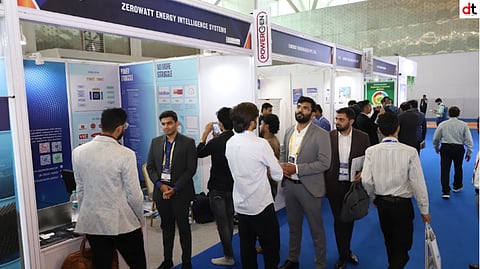
Bringing this transformation into focus, ENCIS is organising Bharat Electricity, POWERGEN India & Indian Utility Week from 01-03 September 2026 at Yashobhoomi (IICC), New Delhi. The event will provide India’s most comprehensive platform for power sector innovation, digital transformation, and sustainable energy leadership. With over 15,000 professionals, 250+ exhibitors from more than 30 countries, and 150+ industry visionaries and policymakers expected to attend, the week will connect the entire power sector ecosystem and foster direct collaboration at a critical juncture for India’s energy transition.
Shri Bhupinder Singh Bhalla, IAS (Retd.), Honorary Chairman, Bharat Electricity Council at ENCIS; and Former Secretary, Ministry of New & Renewable Energy; Government of India, said, “By 2030, the decisive divide will not be between conventional and renewable generation; it will be between assets that learn and assets that merely operate. India is adding capacity at historic scale, but the next productivity frontier lies in extracting greater availability, flexibility, safety and operating life from every asset. AI can enable this, but only when it is built on trusted data, sound engineering, cyber-secure architecture and accountable human judgement. The objective is not autonomous power plants for their own sake; it is more reliable, affordable and resilient electricity for the economy.”
Survey participants pointed to predictive asset management and proactive maintenance as the most promising areas for AI application, with 54% saying these technologies will help power producers catch faults early, reduce outages, and get more life out of expensive equipment. While grid management and renewable integration were also mentioned, most see the fastest and most significant benefits coming from digitalising core plant operations.
Shri Abhishek Bhatnagar, Director General, ENCIS, said, “The survey reveals a sector with conviction, but not yet complete readiness. Industry sees the value; the execution architecture, skills, data, legacy integration and governance must now catch up. Fragmented pilots will not create national advantage. India requires a shared agenda that links policymakers, generating companies, technology leaders, research institutions and capital providers around trusted data, responsible AI and scalable deployment. The benchmark must remain uncompromising: does the technology improve reliability, reduce cost, strengthen safety, accelerate decarbonisation and advance energy sovereignty?”
The findings further reveal that efficiency is the primary goal for most organisations; 61% of those surveyed named it as their top reason for investing in AI, while 22% are motivated by the need to speed up the shift to clean energy. Only 9% selected regulatory compliance, highlighting a strong belief that AI is now a business imperative, not just a matter of meeting requirements.
It further highlights the shortage of skilled professionals as the most significant barrier; over 37% of respondents said that they have faced the challenge of integrating new technology with ageing infrastructure (23%) and concerns about data privacy and security (18%). As AI-driven electricity demand grows four times faster than in other sectors, addressing these challenges has become a top priority for the industry.
Based on the survey findings and sectoral evidence, ENCIS highlights five priorities to accelerate responsible AI adoption in India’s power generation sector. First, focus on value-driven AI applications that directly improve key operational outcomes like availability, efficiency, emissions, and safety. Second, build a trusted data fabric across plants and fleets by standardising asset taxonomies, ensuring reliable sensor data, and enabling secure, interoperable systems.
Third, design AI systems specifically for critical infrastructure, with built-in validation, explainability, cybersecurity, and clear human oversight. Fourth, move beyond isolated pilot projects by scaling proven solutions through standardised architectures and robust deployment protocols. Finally, develop hybrid talent by equipping engineers with data and AI skills, and deepening power-system expertise among digital professionals.
𝐒𝐭𝐚𝐲 𝐢𝐧𝐟𝐨𝐫𝐦𝐞𝐝 𝐰𝐢𝐭𝐡 𝐨𝐮𝐫 𝐥𝐚𝐭𝐞𝐬𝐭 𝐮𝐩𝐝𝐚𝐭𝐞𝐬 𝐛𝐲 𝐣𝐨𝐢𝐧𝐢𝐧𝐠 𝐭𝐡𝐞 WhatsApp Channel now! 👈📲
𝑭𝒐𝒍𝒍𝒐𝒘 𝑶𝒖𝒓 𝑺𝒐𝒄𝒊𝒂𝒍 𝑴𝒆𝒅𝒊𝒂 𝑷𝒂𝒈𝒆𝐬 👉 Facebook, LinkedIn, Twitter, Instagram
