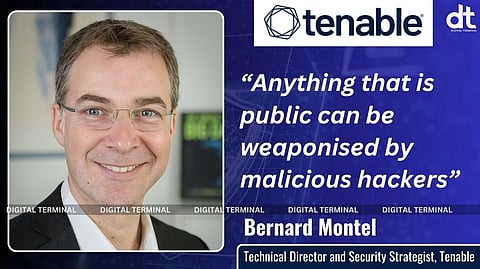

As we navigate through an increasingly digital world, the lines between convenience and vulnerability continue to blur. Bernard Montel, Technical Director and Security Strategist at Tenable, emphasizes the importance of staying vigilant in a landscape where data is both power and risk.
Don't Be a Victim, Be in Control
With the rapid advancements in technology and the rise of generative AI, data privacy is more important than ever, and Montel’s advice offers valuable guidance on how to navigate this complex landscape. He explains, “We live in a world where everything about us is data. While some information may be given willingly, other information is being captured invisibly. Consider a photograph, while you might be sharing an image of yourself, you're also revealing more than just your winning smile. An image’s metadata includes details about the camera, lens, and shooting settings, as well as information about the location and photographer. For a threat actor those details can build a different picture of you, one that can turn you into a victim.
“If you want to protect yourself from hackers, then you have to be shrewd about the information you disclose. Think about who you are sharing your personal information with. Think about what information you are sharing. Think about where you are sharing that information. Don’t invite strangers into your life by telling them all your intimate details on social channels. Think before you click. Anything that is public can be weaponised by malicious hackers.
Data Privacy Day: Organizations Face New Data Challenges in the Age of Generative AI
“2025’s Data Privacy Day brings with it the sense of being at a crucial crossroads, particularly since Generative AI invaded our daily life.
“For organisations, data is the essence of the company. It’s information about your customers, your employees, your intellectual property, your financial performance, and more. It’s the lifeblood that decisions are made on.
“Data breaches can lead to mistrust and brand damage externally, while internally there is increased scrutiny from the board who are questioning the organisation’s security posture. If there’s not, there should be!
“With data at the heart of everything, it would be amiss not to mention the potential disruption AI has introduced, adding another layer of risk. For organisations, controlling AI deployment usage while also identifying vulnerabilities within AI tools and AI development packages, is yet another headache for the security team to worry about.
“On the flip side, harnessing the potential of AI to supercharge the way we utilise data can be monumental. For example, using AI to transform our approach to security by enabling faster analysis, decision-making and guidance, cutting through complexity to stay ahead of attackers.
He explains how cybercriminals have adapted to the evolving threat landscape. “We’ve seen malicious actors get increasingly aggressive with their threats. Ten years ago a ransomware attack was really obvious. Today these attacks are less obvious and can go undetected for a few weeks as threat actors look
to obfuscate their presence. Once they’ve extracted the information, it’s out of your control. However, while they’ve been creeping around, they could also have been laying incendiaries in case ransoms aren’t forthcoming, threatening to destroy the data which could leave your organisation unable to function. In addition, threat actors are starting to harness AI to write malware for ransomware attacks.
“Every organisation must take action to protect the data it relies upon to function and that it's trusted to protect. Know what is important, the attack paths that could be travelled should a threat actor gain access, then prioritise efforts to shut off these paths. It’s not rocket science but foundational security practices that will protect what matters most.”
𝐒𝐭𝐚𝐲 𝐢𝐧𝐟𝐨𝐫𝐦𝐞𝐝 𝐰𝐢𝐭𝐡 𝐨𝐮𝐫 𝐥𝐚𝐭𝐞𝐬𝐭 𝐮𝐩𝐝𝐚𝐭𝐞𝐬 𝐛𝐲 𝐣𝐨𝐢𝐧𝐢𝐧𝐠 𝐭𝐡𝐞 WhatsApp Channel now! 👈📲
𝑭𝒐𝒍𝒍𝒐𝒘 𝑶𝒖𝒓 𝑺𝒐𝒄𝒊𝒂𝒍 𝑴𝒆𝒅𝒊𝒂 𝑷𝒂𝒈𝒆𝐬 👉 Facebook, LinkedIn, Twitter, Instagram
