
In the rapidly evolving digital landscape, the role of Chief Information Officers (CIOs) and Information Technology (IT) leaders has become increasingly significant. They now drive digital transformation, align technology with business strategy, build resilient IT Infrastructures, manage or optimise costs, ensure customer centricity, drive innovation while parallel running IT operations. For all this, IT leaders must continually update their skills and those of their teams to keep pace with emerging technologies. To effectively navigate the complex challenges and opportunities presented by the Digital technologies, IT Leaders must possess a unique blend of leadership qualities, ethical principles and strategic acumen. Let us look at each of these.
Leadership qualities for IT Leaders
Leadership qualities are essential for CIOs and IT heads as they play a crucial role in driving digital transformation and ensuring value delivery to their organizations. Five vital traits for effective CIOs and IT Leaders include:
1. Setting Vision and Focusing on Planning & Execution: An effective IT leader must be able to foresee the impact of evolving technologies on business processes and outcomes. They must look beyond immediate challenges and cultivate a long-term vision, being mindful of the pace of global tech advancements and their applications in the local business environment. Clearly articulating this vision to stakeholders and inspiring teams to strive towards it comes next. As we all know, a strategy without execution remains mere aspiration, lacking tangible impact and can best be seen as wishful thinking. The value of a strategy lies in how well it is planned and executed. IT leaders must deliver strategic plans on time, on budget, and aligned with business objectives, effectively addressing organizational technology needs.
2. Embracing Change and Fostering a Culture of Experimentation and Collaboration: The IT landscape is constantly evolving, and IT leaders must not only adapt to newer technologies and trends themselves but also encourage their teams and users to adapt to the same. For this, I believe, IT leaders need to lead from front, setting the tone with their decisions and behaviours. IT leaders have to foster a culture of innovation and encourage their teams to think creatively and come up with new ideas. While some innovation efforts may fail, some of these ideas can lead to breakthrough solutions giving huge competitive advantage for the organization. Leaders should embrace calculated risk-taking and encourage the mantra: 'Fail Fast, Fail Cheap'.
3. Crisis Management: IT leaders must be prepared (both mentally and technically) to handle crises. These crises could include a ransomware or other cyber attacks, hardware or software failures, natural disasters or even crisis in team or with stakeholders. Effective IT leaders need to rapidly assess, decisively act, and lead their teams (and other stakeholders) with confidence through periods of uncertainty.
4. Team Building and Motivation: Usually, IT teams work under a lot of stress. This could stem from various factors including but not limited to tight deadlines for project deliveries, unrealistic expectations from stakeholders and shoestring budgets. In addition, the general attrition rates in the IT sector are pretty high. IT leaders must cultivate a dynamic, inclusive, and collaborative culture that empowers teams to excel and thrive. Leaders also need to provide support and guidance and recognize accomplishments of their team not just focussing on delivery alone. This involves building trust, encouraging teamwork, and recognizing the contributions of team members, inspiring and motivating teams to achieve their best.
5. Collaboration & Stakeholder Management: IT leaders need to work collaboratively and must be able to build strong relationships with stakeholders, both within and outside the organization. This not only involves effective communication, negotiation, and influencing skills but also building trust and credibility with stakeholders. I believe, this will not only help IT leaders to effectively navigate the complex challenges and opportunities presented by the digital age, manage change well but also drive more value from IT investments.
Ethical Practices for IT Leaders
IT leaders play a crucial role in shaping the digital landscape of their organizations and their actions have far-reaching implications not just for their organizations but also various stakeholders including customers, vendors and others. Adhering to ethical principles is essential to ensure that technology is used responsibly. Five ethical principles that I feel IT Leaders must follow at all times (apart from their personal ethics and integrity) include:
1. Transparent Decision-Making & Communication: Transparency is crucial for building trust within the organization and with external stakeholders. IT leaders should implement the right set of processes, reviews and audit mechanisms for decision-making, ensuring that all technological implementations are in the best interest of the company and its customers. They have to prioritize transparency through timely communication, openly addressing system status, potential limitations, and technical challenges and not putting things under the carpet.
2. Prioritizing Data Privacy and Compliance: IT teams are custodians of a lot of hyper sensitive information. Thus it becomes the responsibility of the tech leads to safeguard data, which includes personal information, financial data, and intellectual property. Breaches of data privacy can lead to severe consequences, such as financial losses, reputational damage, and legal liabilities. In addition, they must comply with data privacy regulations, such as IT Act, GDPR, upcoming DPDP act or others not only to avoid penalties, but more importantly to maintain trust with customers and stakeholders. Similarly, IT leaders must ensure that innovation occurs within ethical boundaries and for that they need to establish clear guidelines for the protection of intellectual property, preventing misuse or infringement, and fostering a culture of responsible innovation.
3. Ensuring Ethical AI: IT leaders today are increasingly adopting Artificial Intelligence and Machine Learning to future-proof their organizations, with a multitude of projects in development or already live. We all know that AI systems can perpetuate biases present in the data they are trained on, leading to discriminatory outcomes. I believe, tech leaders must ensure that AI algorithms are developed and deployed ethically to avoid biases and promote fairness. AI systems should be transparent, allowing users to understand how decisions are made. Accountability for AI-related outcomes is also crucial, ensuring that there are mechanisms to address potential harms.
4. Bridging Digital Divide & Promoting Inclusivity: IT leaders have a responsibility to ensure that technology is accessible to all their stakeholders (employees, customers, vendors and so on) regardless of their socio-economic status or location. For example, the systems and applications, training, support desk are available in local languages. Similarly, IT leaders need to ensure websites, mobile apps, and other digital services are accessible to people with disabilities, adhering to standards like WCAG (Web Content Accessibility Guidelines). Bridging the digital divide and promoting inclusivity can help organizations not only get more value from their IT investments but also enhance reputation.
5. Focus on Sustainability: IT leaders need to keep in mind the environmental impact of technology, such as energy consumption and e-waste. Promoting sustainable practices, such as energy-efficient data centres, cloud adoption, virtualization and consolidation, responsible e-waste management, reducing paper consumption and promoting a paper-less digital culture can help reduce the negative effects of technology on the planet.
To summarize, I believe effective IT leadership demands a synergy of visionary thinking, adaptability, and unwavering ethical integrity. CIOs and IT heads who successfully navigate the intersection of business and technology, foster cross-functional collaboration, and align with organizational objectives, can deliver great transformative value.
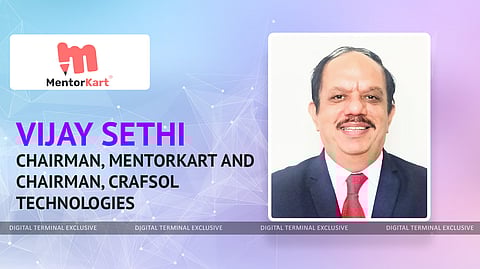
{Authored by Vijay Sethi, Chairman, MentorKart And Chairman, Crafsol Technologies}
𝐒𝐭𝐚𝐲 𝐢𝐧𝐟𝐨𝐫𝐦𝐞𝐝 𝐰𝐢𝐭𝐡 𝐨𝐮𝐫 𝐥𝐚𝐭𝐞𝐬𝐭 𝐮𝐩𝐝𝐚𝐭𝐞𝐬 𝐛𝐲 𝐣𝐨𝐢𝐧𝐢𝐧𝐠 𝐭𝐡𝐞 WhatsApp Channel now! 👈📲
𝑭𝒐𝒍𝒍𝒐𝒘 𝑶𝒖𝒓 𝑺𝒐𝒄𝒊𝒂𝒍 𝑴𝒆𝒅𝒊𝒂 𝑷𝒂𝒈𝒆𝐬 👉 Facebook, LinkedIn, Twitter, Instagram
