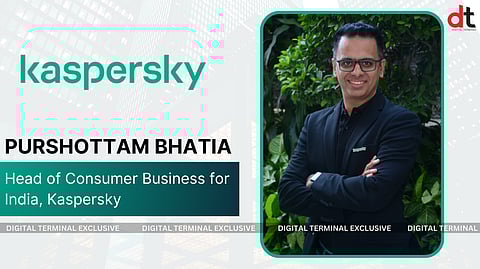

Authored by Purshottam Bhatia, Head of Consumer Business for India, Kaspersky
In today’s fast-paced digital world, protecting our personal devices is more important than ever. Our smartphones, laptops, tablets, and other connected devices have become essential to our daily lives. We use them for work, communication, and entertainment. But as we rely more on these devices, the risks from cyber threats grow. Cybercriminals are constantly looking for new ways to steal personal data, hack into financial accounts, or spy on private activities. That’s why cybersecurity isn’t just for businesses anymore—it’s something everyone needs to think about.
What’s changing the game is artificial intelligence (AI). As AI gets more involved in cybersecurity, it's completely reshaping how we protect our devices, making security faster, smarter, and more effective. Kaspersky, for example, has integrated AI into its cybersecurity tools to help spot and stop threats before they do damage. Kaspersky's AI-powered security uses advanced technology to track and respond to threats in real-time, adapting as new risks arise.
In the past, firewalls, antivirus software, and manual system checks were the main ways to keep things safe. While these tools still have their place, they’re mostly reactive, meaning they only kick in after something bad has already happened. AI, on the other hand, takes a proactive approach. Kaspersky’s AI-powered systems analyze huge amounts of data and spot unusual patterns or behaviors that might signal a potential threat, often before it even reaches your device.
This helps detect complex and evolving attacks, like ransomware or Advanced Persistent Threats (APTs), which older tools might miss. What's even better? These systems get smarter over time, learning how to better protect against new kinds of malware or phishing scams without requiring constant updates from humans.
For context, Kaspersky’s AI analyzed over 4.9 billion cyberattacks in 2024 and detected 467,000 new malicious files every single day. That's a huge amount of data being processed to keep users safe in real-time.
What was once a tool reserved for large companies and experts is now available to regular consumers. AI-driven protection is being built into personal security software, so even if you’re not a tech expert, you can still get top-notch protection. Kaspersky’s AI can automatically spot phishing emails, block harmful apps, and alert you to suspicious activity—all with minimal interruption.
This means you don’t need to constantly check for updates or worry about keeping your system secure. The protection runs in the background, letting you go about your day.
However, as with any big leap in technology, there are challenges, especially around privacy. To work well, AI needs access to large amounts of user data, including browsing habits, app usage, and even location info.
This raises important questions: How much data is too much? Who controls it? How is it being stored and used? Kaspersky takes privacy seriously, making sure that data collection is transparent, secure, and for the right reasons. The company’s Global Transparency Initiative lets users see exactly how their data is used and ensures they have control over it.
Looking ahead, AI will play an even bigger role in protecting the growing number of connected devices we use—from smart thermostats to wearables. While these devices make life more convenient, they also create new vulnerabilities. A single weak link in a smart home system could lead to much larger problems. AI will help manage these complexities, offering protection across all of your devices, from laptops to smart devices.
As AI technology continues to improve, security tools are becoming more personalized. Instead of the same solution for everyone, future security tools will learn and adapt to each user’s habits and preferences. For example, imagine your security system knowing when you're more likely to open risky emails or visit unfamiliar websites and adjusting its sensitivity accordingly. Kaspersky already offers this kind of adaptive protection, ensuring that your devices are always one step ahead of potential threats.
However, with this personalization comes more privacy concerns—how do you make things smarter without feeling like you’re being watched all the time? The answer is in creating systems that are not only technically powerful but also grounded in trust and transparency. Giving users control and clarity over their data is essential.
In conclusion, the future of personal device protection is being shaped by two major factors: the rise of AI and the growing demand for privacy-focused solutions. Consumers are more connected than ever, but they’re also more cautious, looking for ways to stay safe without giving up their privacy. AI offers incredible tools to detect and stop threats before they happen, adjusting in real time to new risks.
But for these solutions to work, they need to be designed with users’ trust and control at the forefront. The most successful cybersecurity solutions will combine cutting-edge technology with human-centered values, ensuring that users stay protected, informed, and in control as the digital world keeps evolving.
𝐒𝐭𝐚𝐲 𝐢𝐧𝐟𝐨𝐫𝐦𝐞𝐝 𝐰𝐢𝐭𝐡 𝐨𝐮𝐫 𝐥𝐚𝐭𝐞𝐬𝐭 𝐮𝐩𝐝𝐚𝐭𝐞𝐬 𝐛𝐲 𝐣𝐨𝐢𝐧𝐢𝐧𝐠 𝐭𝐡𝐞 WhatsApp Channel now! 👈📲
𝑭𝒐𝒍𝒍𝒐𝒘 𝑶𝒖𝒓 𝑺𝒐𝒄𝒊𝒂𝒍 𝑴𝒆𝒅𝒊𝒂 𝑷𝒂𝒈𝒆𝐬 👉 Facebook, LinkedIn, Twitter, Instagram
