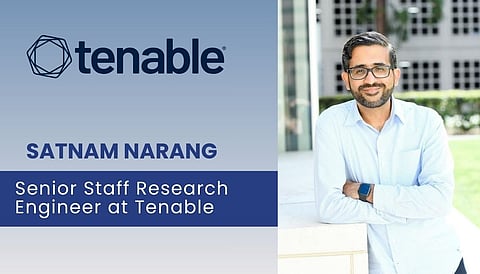

Authored by Satnam Narang, Senior Staff Research Engineer, Tenable
The cybersecurity landscape is a constant race in which attackers evolve rapidly and defenders must keep pace. For many years, skilled penetration testers have been at the forefront of proactive security, simulating realistic attacks to uncover weaknesses before adversaries exploit them.
But as environments become more complex and AI-driven threats accelerate, traditional, point-in-time penetration testing is no longer enough. Progress lies not in eliminating human expertise but in expanding what humans can achieve through intelligent, AI-enabled support.
The State of Penetration Testing in India
In India, vulnerability assessments and penetration testing are often discussed together, yet they serve different and equally vital roles. A vulnerability assessment provides the broad, high-level view: it identifies known weaknesses at scale, much like a medical check-up that diagnoses potential issues. A penetration test goes further by demonstrating how these weaknesses could be exploited to gain access, revealing the real-world impact of a breach.
Neither approach is sufficient on its own. A vulnerability scan without human interpretation is little more than an alert list, while a penetration test without automated discovery risks missing issues in complex, fast-moving environments.
Many Indian organisations are also grappling with cyber hygiene challenges and resource constraints, making it difficult to test frequently enough to match modern development velocity. A 2025 survey found that nearly 57% of Indian organisations lacked basic cyber hygiene practices. As cloud adoption accelerates and digital footprints grow, the demand for continuous, contextual testing has exceeded what human teams alone can consistently deliver.
Reducing Alert Fatigue and Prioritising What Matters
Security teams today face a torrent of alerts from numerous tools, creating an environment where meaningful signals are easily lost in the noise. Attackers understand this dynamic well; they rely on overwhelmed analysts being unable to distinguish between trivial issues and the few vulnerabilities that genuinely matter.
This is where AI-enhanced security platforms shift the balance. Instead of treating all issues equally, these systems analyse context, asset criticality and real-world exploitability to surface the exposures most likely to be used in an attack. By sharpening the focus of security teams, AI reduces noise and ensures that attention is directed to risks with the greatest potential impact.
Accelerating Testing and Reducing Risk
Traditional penetration testing remains essential, but it is inherently limited by its cadence. Because attackers continuously search for weaknesses, a quarterly or annual assessment cannot provide true year-round security. New code, cloud deployments and configuration changes introduced between tests create windows of exposure that adversaries can exploit well before the next scheduled engagement.
AI does not replace manual penetration testing, but it meaningfully complements it through continuously discovering assets, identifying misconfigurations and mapping plausible attack paths. This provides organisations with a near real-time view of their attack surface.
When integrated with an exposure management platform, AI accelerates the remediation cycle by validating whether fixes have been successful, which is something that traditionally required repeated manual effort. The result is a faster, tighter loop between development and security teams. By reducing the time it takes to detect, validate and remediate vulnerabilities, organisations significantly shrink the window in which attackers can act.
A Future Built on Human + AI Collaboration
The future of penetration testing is a partnership between human expertise and AI-driven insights. AI delivers the scale and speed required to keep pace with modern digital environments, while humans provide the experience, intuition and adversarial thinking no algorithm can easily replicate.
This fusion allows organisations to move beyond reactive, checklist-driven approaches and adopt a more proactive, outcome-focused model, one where exposure is continuously identified, prioritised and reduced. In a world where innovation never slows, AI-assisted penetration testing helps make security not just a defensive necessity but a foundational enabler of growth and resilience.
𝐒𝐭𝐚𝐲 𝐢𝐧𝐟𝐨𝐫𝐦𝐞𝐝 𝐰𝐢𝐭𝐡 𝐨𝐮𝐫 𝐥𝐚𝐭𝐞𝐬𝐭 𝐮𝐩𝐝𝐚𝐭𝐞𝐬 𝐛𝐲 𝐣𝐨𝐢𝐧𝐢𝐧𝐠 𝐭𝐡𝐞 WhatsApp Channel now! 👈📲
𝑭𝒐𝒍𝒍𝒐𝒘 𝑶𝒖𝒓 𝑺𝒐𝒄𝒊𝒂𝒍 𝑴𝒆𝒅𝒊𝒂 𝑷𝒂𝒈𝒆𝐬 👉 Facebook, LinkedIn, Twitter, Instagram
