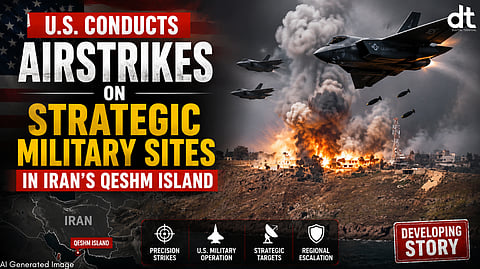

A sharp escalation in tensions between the United States and Iran has reignited concerns over stability in the Gulf, following a series of military actions that unfolded across one of the world's most strategically important regions. The latest developments come at a time when diplomatic efforts aimed at reducing hostilities were reportedly gaining momentum, highlighting the fragile nature of relations between the two adversaries.
The confrontation began after US forces carried out strikes on targets located on Iran's Qeshm Island, a strategically significant location situated near the Strait of Hormuz. Iranian authorities condemned the operation, describing it as an attack on their sovereign territory and military infrastructure.
Iran Responds with Missile and Drone Operations
In what Tehran described as a retaliatory action, Iranian forces launched missiles and drones toward locations associated with American military presence in Kuwait and Bahrain. The operation marked one of the most direct responses by Iran to recent US military activity in the region.
Officials in both Gulf nations acknowledged the incidents and activated emergency security protocols. Air defense systems were deployed while authorities issued public advisories urging residents to remain vigilant and comply with safety instructions. Citizens were also warned against approaching any debris that may have resulted from aerial interceptions.
Iranian state media claimed the strikes were aimed at American military facilities and assets operating in the Gulf. According to reports from Tehran, the operation was intended to demonstrate Iran's readiness to respond decisively to attacks targeting its interests.
Washington Rejects Iranian Claims
The United States, however, has strongly disputed Iranian assertions regarding the effectiveness of the retaliatory strikes.
According to statements issued by US Central Command, American and allied air defense systems successfully intercepted incoming missiles and drones before they could cause significant damage. US officials further rejected reports suggesting that key American military installations or naval assets in Bahrain had been impacted.
Washington maintained that its forces remain fully prepared to respond to any further threats directed at American personnel or regional partners.
Growing Concerns Over the Strait of Hormuz
The latest military exchange has once again drawn international attention to the Strait of Hormuz, a critical maritime corridor through which a substantial portion of global energy supplies transit each day.
Security experts warn that any prolonged escalation in the area could have significant implications for international shipping, oil markets, and regional security. Even limited military confrontations near the waterway have historically triggered concerns among energy traders and global policymakers.
The strategic importance of the Gulf means that any disruption has the potential to extend beyond the immediate conflict zone and affect economies worldwide.
Diplomacy Continues Despite Rising Tensions
Ironically, the military escalation comes amid reports that diplomatic channels between Washington and Tehran remain active.
Media reports indicate that discussions regarding a potential agreement to reduce hostilities have continued in recent weeks. Sources familiar with the negotiations suggest that both sides have explored proposals that could temporarily ease tensions and support stability across the region.
Among the reported ideas under discussion are measures related to a temporary ceasefire framework and arrangements intended to keep vital maritime routes open and secure.
Key Differences Still Prevent a Breakthrough
Despite signs of progress, significant obstacles remain before any formal understanding can be reached.
Reports suggest that both governments continue to disagree on several critical provisions of a potential agreement. While Washington is believed to be seeking modifications to certain terms, Tehran has repeatedly signaled that it is unwilling to accept conditions it views as one-sided or inconsistent with its national interests.
As a result, negotiations remain delicate and vulnerable to disruption from events on the ground.
Region Watches for the Next Move
The latest exchange underscores the increasingly complex balance between military deterrence and diplomatic engagement in the Middle East. While both nations continue to communicate through political and diplomatic channels, military actions are simultaneously raising the risk of a broader confrontation.
With air defense systems on alert across the Gulf and tensions remaining high, regional governments and international observers are closely monitoring developments. Whether the coming days bring renewed diplomacy or further escalation may determine the future course of one of the world's most consequential geopolitical rivalries.
𝐒𝐭𝐚𝐲 𝐢𝐧𝐟𝐨𝐫𝐦𝐞𝐝 𝐰𝐢𝐭𝐡 𝐨𝐮𝐫 𝐥𝐚𝐭𝐞𝐬𝐭 𝐮𝐩𝐝𝐚𝐭𝐞𝐬 𝐛𝐲 𝐣𝐨𝐢𝐧𝐢𝐧𝐠 𝐭𝐡𝐞 WhatsApp Channel now! 👈📲
𝑭𝒐𝒍𝒍𝒐𝒘 𝑶𝒖𝒓 𝑺𝒐𝒄𝒊𝒂𝒍 𝑴𝒆𝒅𝒊𝒂 𝑷𝒂𝒈𝒆𝐬 👉 Facebook, LinkedIn, Twitter, Instagram
