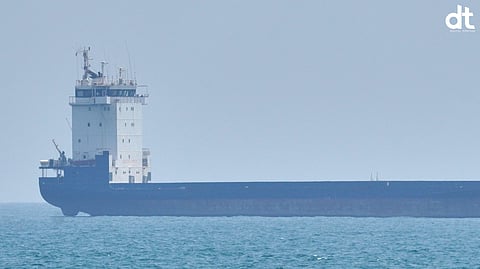

A fresh wave of confrontation has emerged between the United States and Iran after American naval forces seized an Iranian-flagged cargo ship near the strategically vital Strait of Hormuz, prompting sharp reactions from Tehran and raising concerns over a possible broader military escalation in the Gulf region.
The latest development has once again placed one of the world’s most sensitive maritime corridors under global focus, with security experts warning that any prolonged disruption in the area could impact international trade routes, oil supplies, and geopolitical stability.
Cargo Ship Intercepted in Gulf Waters

According to reports, the vessel identified as Touska was intercepted by US naval forces in waters near the Gulf of Oman after allegedly attempting to pass through an American naval blockade. US authorities claimed the ship ignored repeated warnings and continued its course, leading to military action to stop the vessel.
Following the interception, American forces reportedly boarded the cargo ship and took control of it. US officials later stated that the vessel and its contents were being inspected, while documentation linked to its cargo was under review. Video footage released by US military channels reportedly showed naval personnel conducting the operation.
The seizure marks one of the most direct maritime confrontations involving both nations in recent months.
Tehran Condemns Seizure, Calls It Illegal
Iran reacted strongly to the operation, condemning the ship’s capture and accusing Washington of violating international norms and previous ceasefire understandings.
Iranian officials described the move as an act of aggression and maritime piracy carried out under military force. State-linked media reports said the cargo ship had been traveling from China toward Iranian territory when it was intercepted.
Tehran also signaled that it would not allow the incident to go unanswered, warning of consequences for what it called unlawful interference with civilian maritime movement.
Claims of Retaliatory Drone Strikes
Soon after the vessel was seized, Iranian state-affiliated media claimed that retaliatory drone attacks had been launched against US military ships operating in the Gulf of Oman.
However, no independent confirmation has yet emerged regarding the scale of the alleged strikes, the number of drones used, or whether any American vessels sustained damage.
US authorities had not publicly confirmed those claims at the time of reporting, leaving uncertainty over the full extent of Iran’s response.
Strait of Hormuz Returns to Global Spotlight
The incident has once again highlighted the strategic significance of the Strait of Hormuz, one of the world’s most important energy chokepoints. A substantial share of global crude oil exports and commercial shipping traffic passes through the narrow waterway every day.
Any military escalation near the route has the potential to disrupt tanker movement, raise shipping insurance costs, and trigger volatility in international energy markets.
Analysts noted that even short-term instability in the region can create ripple effects across global supply chains.
Markets and Diplomacy Under Pressure
Energy markets reportedly reacted nervously to the developments, with renewed concerns over supply disruptions and possible wider conflict in the Middle East.
The maritime clash also comes at a delicate diplomatic moment, as regional powers and international stakeholders continue efforts to reduce tensions through indirect negotiations and backchannel talks.
Security observers believe that if further military encounters occur in the Gulf, it could complicate diplomatic initiatives and increase the risk of unintended escalation.
What Happens Next
With both Washington and Tehran maintaining firm positions, the coming days are expected to be critical. Monitoring of naval movements in the Gulf is likely to intensify, while international governments closely watch whether the confrontation remains limited or expands further.
For now, the seizure of the cargo vessel has become the latest flashpoint in the long-running rivalry between the United States and Iran, once again demonstrating how quickly tensions in the Gulf can influence global politics and markets.
𝐒𝐭𝐚𝐲 𝐢𝐧𝐟𝐨𝐫𝐦𝐞𝐝 𝐰𝐢𝐭𝐡 𝐨𝐮𝐫 𝐥𝐚𝐭𝐞𝐬𝐭 𝐮𝐩𝐝𝐚𝐭𝐞𝐬 𝐛𝐲 𝐣𝐨𝐢𝐧𝐢𝐧𝐠 𝐭𝐡𝐞 WhatsApp Channel now! 👈📲
𝑭𝒐𝒍𝒍𝒐𝒘 𝑶𝒖𝒓 𝑺𝒐𝒄𝒊𝒂𝒍 𝑴𝒆𝒅𝒊𝒂 𝑷𝒂𝒈𝒆𝐬 👉 Facebook, LinkedIn, Twitter, Instagram
