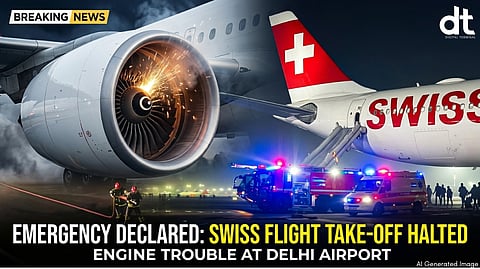

A major aviation emergency unfolded at Indira Gandhi International Airport in the early hours of Sunday after a Swiss International Air Lines aircraft bound for Zurich was forced to abort takeoff following a technical malfunction linked to one of its engines. The incident led to a runway evacuation and emergency response, though airport operations continued without disruption.
High-Speed Takeoff Rejected After Engine Trouble
The aircraft involved was Flight LX147 operating the Delhi to Zurich sector using an Airbus A330-300. According to reports, the jet had already accelerated significantly on the runway before the crew detected a failure in Engine No. 1 and immediately rejected takeoff. Some reports indicate the aircraft had reached nearly 193 kmph before braking procedures were initiated.
This type of maneuver, known in aviation as a rejected takeoff, is among the most critical decisions pilots make because it happens at high speed with limited reaction time.
Smoke, Fire Alert and Rapid Emergency Deployment

Witness accounts and initial reports said smoke was seen from the left side of the aircraft, while flames were reportedly noticed near the undercarriage area after the aircraft came to a halt. A full emergency was declared by airport authorities, triggering deployment of rescue crews, fire tenders, and medical responders to the runway.
The prompt response ensured that the situation remained contained and did not escalate into a larger fire event.
Passengers Evacuated Through Emergency Slides
All passengers and crew members were evacuated from the aircraft. Emergency slides were deployed, while mobile stairs were also arranged for a limited number of travelers who could not use the slides.
The airline confirmed that multiple individuals sustained injuries during the evacuation. Reports vary between five and six people requiring treatment, including passengers and at least one cabin crew member. Most injuries are understood to be minor and linked to the evacuation process rather than the engine incident itself.
Over 240 People Were On Board
The flight was carrying 232 passengers and 13 crew members, according to published reports. Some accounts separately listed four infants within the passenger count.
Given the number of people onboard, aviation observers noted that the swift evacuation reflected effective crew training and emergency preparedness.
Airport Operations Continued Normally
Despite the dramatic incident, Delhi airport authorities stated that normal flight movements were not significantly impacted. Runway management and safety procedures were executed in line with established protocols, allowing broader airport operations to remain stable.
Technical Inspection and Investigation Underway
Swiss International Air Lines said technical experts would travel to New Delhi to inspect the aircraft and determine the next course of action. The airline is also expected to arrange onward travel or rebooking support for affected passengers.
Investigators will likely examine engine systems, braking performance, sensor alerts, and runway response data as part of the review.
Why This Incident Matters
While commercial aviation remains one of the safest modes of transport, this event highlights how rigorous pilot training, engineering safeguards, and airport emergency readiness can prevent a technical fault from becoming a catastrophe.
For passengers on board, the early morning flight became an intense reminder of how quickly routine departures can turn into high-stakes emergencies.
𝐒𝐭𝐚𝐲 𝐢𝐧𝐟𝐨𝐫𝐦𝐞𝐝 𝐰𝐢𝐭𝐡 𝐨𝐮𝐫 𝐥𝐚𝐭𝐞𝐬𝐭 𝐮𝐩𝐝𝐚𝐭𝐞𝐬 𝐛𝐲 𝐣𝐨𝐢𝐧𝐢𝐧𝐠 𝐭𝐡𝐞 WhatsApp Channel now! 👈📲
𝑭𝒐𝒍𝒍𝒐𝒘 𝑶𝒖𝒓 𝑺𝒐𝒄𝒊𝒂𝒍 𝑴𝒆𝒅𝒊𝒂 𝑷𝒂𝒈𝒆𝐬 👉 Facebook, LinkedIn, Twitter, Instagram
