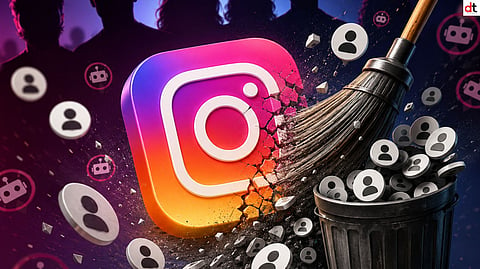

Instagram has reportedly removed millions of suspected bot followers from some of the world’s biggest celebrity accounts, triggering sudden and dramatic drops in follower counts across the platform. The move, carried out by Meta as part of a large-scale “bot purge,” has reignited conversations around artificial engagement, influencer credibility, and the growing business of fake social media popularity.
Among the most notable accounts affected were those of Taylor Swift, Ariana Grande, BTS, Kylie Jenner, and Cristiano Ronaldo.
According to figures circulating online, Taylor Swift reportedly lost around five million followers, while Ariana Grande and BTS each saw declines of nearly seven million. Cristiano Ronaldo’s follower count allegedly dropped by eight million, while Kylie Jenner appeared to witness the biggest reduction, with more than 15 million accounts disappearing from her profile overnight.
What Triggered the Sudden Follower Drop?
The decline was not linked to hacking, cyberattacks, or account suspensions. Instead, it appears to be the result of Meta intensifying its long-running effort to eliminate fake and automated accounts from Instagram.
Bot purges are not new for the platform. Social media companies routinely remove suspicious accounts that violate authenticity guidelines. However, users and digital marketing observers say the latest action appears far more aggressive than previous cleanups, with several high-profile profiles experiencing unusually sharp declines in a single day.
Screenshots comparing follower counts before and after the cleanup quickly spread across social media, fueling debate over how widespread fake engagement has become within influencer culture.
The Business Behind Bot Followers
Bot followers are fake or automated accounts that are often created using software tools rather than real individuals. These accounts are commonly used to artificially inflate follower counts, boost likes, increase comments, and create the illusion of popularity.
Over the years, an entire underground industry has emerged around selling fake engagement. Agencies and third-party services allegedly offer paid packages of followers, likes, and comments to influencers, creators, brands, and even celebrities looking to strengthen their online visibility.
Higher follower counts often translate into better brand deals, sponsorship opportunities, and stronger negotiating power in the influencer economy. For many creators, audience size remains a key metric for commercial partnerships, even as platforms increasingly focus on genuine engagement.
Industry analysts note that fake engagement can distort marketing data and mislead advertisers who rely on social metrics to evaluate campaign reach and audience influence.
Reputation Risks for Influencers and Celebrities
While a drop in followers does not necessarily prove that a celebrity personally purchased fake accounts, such public declines can still impact perception. In many cases, promotional agencies or third-party marketing teams may use aggressive growth tactics without direct involvement from the account owner.
Still, sudden losses in audience numbers can raise questions about authenticity and engagement quality. Brands are becoming increasingly cautious about influencer fraud, especially as companies invest larger budgets into digital campaigns.
The issue of fake online popularity has surfaced before in India’s entertainment industry as well. Rapper Badshah previously faced scrutiny after allegations related to fake views and engagement connected to a music release, highlighting how seriously authorities and advertisers are beginning to treat digital manipulation.
Meta Tightens Platform Authenticity Measures
Meta has consistently stated that removing fake accounts is part of its routine platform maintenance aimed at improving user trust and maintaining authentic interactions. The company also provides tools that allow users to manually identify and remove suspicious followers from their accounts.
For creators and influencers, the latest purge serves as a reminder that artificial audience growth may offer short-term visibility but carries long-term reputational risks. As social platforms continue tightening moderation and verification systems, genuine engagement is becoming more valuable than inflated numbers.
So far, none of the major celebrities reportedly impacted by the cleanup have publicly commented on the sudden decline in followers. However, the incident has once again exposed the hidden mechanics behind social media fame — where follower counts may not always reflect real influence.
𝐒𝐭𝐚𝐲 𝐢𝐧𝐟𝐨𝐫𝐦𝐞𝐝 𝐰𝐢𝐭𝐡 𝐨𝐮𝐫 𝐥𝐚𝐭𝐞𝐬𝐭 𝐮𝐩𝐝𝐚𝐭𝐞𝐬 𝐛𝐲 𝐣𝐨𝐢𝐧𝐢𝐧𝐠 𝐭𝐡𝐞 WhatsApp Channel now! 👈📲
𝑭𝒐𝒍𝒍𝒐𝒘 𝑶𝒖𝒓 𝑺𝒐𝒄𝒊𝒂𝒍 𝑴𝒆𝒅𝒊𝒂 𝑷𝒂𝒈𝒆𝐬 👉 Facebook, LinkedIn, Twitter, Instagram
